Pulp Fiction Forever: How Sci-Fi, Horror, Crime, and Fantasy Paperbacks From the 1950s to the 1980s Built Modern Genre Storytelling
Pulp Fiction Forever: How Sci-Fi, Horror, Crime, and Fantasy Paperbacks From the 1950s to the 1980s Built Modern Genre Storytelling
There was a forty-year stretch — roughly 1950 through 1989 — when the most dangerous, imaginative, and lasting fiction in the English language was not being published in hardcover by Knopf or Random House. It was being printed on cheap wood-pulp paper, slapped between lurid painted covers, sold off wire racks at drugstores and bus stations for thirty-five cents, and consumed by millions of readers who never thought of themselves as having a relationship with literature at all. They just wanted a story. The writers obliged. The result was the greatest sustained explosion of genre storytelling in modern history, and almost every blockbuster movie, prestige TV show, and bestselling novel of the twenty-first century is, in some way, descended from it.
This is the story of pulp fiction from the 1950s to the 1980s — the writers, the magazines, the publishers, the cover artists, the four genres that defined it, and the modern indie publishers, including Lurking Fear Publishing, that are carrying the tradition forward into 2026 and beyond.
1. From Pulp Magazine to Mass-Market Paperback: The 1950s Pivot
The original "pulp" magazines — the ones printed on coarse wood-pulp paper that gave the format its name — peaked in the 1920s, '30s, and '40s. Titles like Weird Tales, Black Mask, Amazing Stories, Astounding Science Fiction, Argosy, and Adventure built the foundation. They paid a penny a word, cultivated stables of writers who could produce stories at industrial speed, and trained a generation of readers to expect color, momentum, and big ideas.
By the early 1950s, that magazine economy was dying. Television was eating the casual-reader audience. Paper costs were rising. The American News Company, which distributed most pulps, collapsed in 1957 — a near-extinction event for the format. But the storytelling didn't die. It migrated.
The mass-market paperback — the small, cheap, square-bound book pioneered by Pocket Books in 1939 and exploded into ubiquity by Bantam, Ballantine, Avon, Dell, Ace, Signet, Gold Medal, and DAW — became the new pulp. The same writers, often the same stories (frequently expanded from magazine novellas into novels), and crucially the same cover-art tradition all moved over. The only thing that changed was the binding.
This is the period people now mean when they say "vintage pulp paperbacks." The paper was no longer technically pulp — it was usually newsprint or low-grade book stock — but the spirit remained. Lurid covers. Bold typography. Promises on the back that no respectable publisher would make. Titles like I, the Jury, The Stars My Destination, The Haunting of Hill House, Conan the Adventurer, A Princess of Mars (reissued endlessly), and Do Androids Dream of Electric Sheep? all reached their largest audiences in this format.
2. The Science Fiction Revolution (1950–1969)
Science fiction is the genre that benefited most dramatically from the pulp-to-paperback transition. The 1950s are still routinely called the "Golden Age" of SF, and for good reason. In a single decade you get Isaac Asimov's Foundation books in their first complete editions, Ray Bradbury's The Martian Chronicles (1950) and Fahrenheit 451 (1953), Arthur C. Clarke's Childhood's End (1953), Robert A. Heinlein's juveniles and then Starship Troopers (1959), Alfred Bester's The Demolished Man (1953) and The Stars My Destination (1956), Theodore Sturgeon's More Than Human (1953), and Walter M. Miller Jr.'s A Canticle for Leibowitz (1959).
The dominant magazines — John W. Campbell's Astounding, H.L. Gold's Galaxy, and Anthony Boucher's The Magazine of Fantasy & Science Fiction — operated as both training grounds and quality filters. A young writer could place a short story in F&SF, expand it the next year into a novel for Ballantine, sell paperback rights to Ace, and survive on the proceeds. This ecosystem produced a generation of working professionals — Robert Sheckley, Frederik Pohl, C.M. Kornbluth, Damon Knight, James Blish, Cordwainer Smith, Andre Norton, Leigh Brackett, Judith Merril — who built modern SF as a craft.
The 1960s detonated. Philip K. Dick, who had been grinding out paperback novels at a brutal pace through the 1950s, hit his peak with The Man in the High Castle (1962), Do Androids Dream of Electric Sheep? (1968), and Ubik (1969). Frank Herbert's Dune appeared in 1965. Roger Zelazny published Lord of Light (1967). Ursula K. Le Guin gave us A Wizard of Earthsea (1968) and The Left Hand of Darkness (1969). Samuel R. Delany published Babel-17 (1966) and Nova (1968). Harlan Ellison edited Dangerous Visions (1967), the anthology that defined the New Wave.
The New Wave — led by Michael Moorcock at New Worlds magazine in Britain, and Ellison, Delany, and Joanna Russ in the U.S. — broke the format wide open. Suddenly SF could be experimental, sexually frank, politically radical, and stylistically ambitious without losing its pulp heartbeat. That tension — high concept plus mass-market accessibility — is the formula that still powers most successful science fiction today.
The legacy is everywhere in modern indie SF. Books like Black Planet, Last Memory of Earth, The Fifth Ship, The Eve Project, Year of Arrival, Architect's Dawn, Vanguard Incident, and Star Man — all in the Lurking Fear catalog — read squarely in this lineage. They are big-idea novels written for actual readers rather than tenure committees, which is exactly the standard the 1960s set.
3. The 1970s and 1980s: Sci-Fi Goes Industrial
By the 1970s, the paperback SF market had become enormous. DAW Books, founded by Donald A. Wollheim in 1971 after his departure from Ace, became the most prolific SF/F imprint on the planet, publishing more than a thousand titles in twenty years. Del Rey (founded 1977 by Judy-Lynn and Lester del Rey under Ballantine) created the modern mass-market fantasy and SF blockbuster — they were the imprint that made Terry Brooks and Stephen R. Donaldson household names. Pocket Books launched the Star Trek novel line, which alone sustained dozens of working writers.
The decade gave us Larry Niven's Ringworld (1970), Joe Haldeman's The Forever War (1974), Octavia Butler's Patternmaster (1976) and Kindred (1979), Frederik Pohl's Gateway (1977), C.J. Cherryh's Downbelow Station (1981), Greg Bear's Blood Music (1985), Orson Scott Card's Ender's Game (1985), and the entire foundational cyberpunk corpus — William Gibson's Neuromancer (1984), Bruce Sterling's Mirrorshades (1986), and Pat Cadigan's Mindplayers (1987).
Cyberpunk in particular is the bridge between the pulp era and contemporary SF. Gibson's prose is hard-boiled crime DNA dressed in chrome — Chandler in cyberspace. The aesthetic is direct continuation of pulp cover art, with neon and circuitry replacing rocket fins and ray guns. Almost every modern thriller about hacking, surveillance, AI or biotech is operating inside Gibson's grammar, which was Hammett's grammar one generation earlier.
4. Horror's Long Climb to Dominance (1950–1989)
Horror in 1950 was the orphan of the pulp era. Weird Tales, the magazine that had launched Lovecraft, Robert E. Howard and Clark Ashton Smith, finally died in 1954. Atomic-age science fiction had largely absorbed the supernatural's cultural function. But horror didn't disappear — it reorganized.
The single most important transitional figure is Richard Matheson. I Am Legend (1954), The Shrinking Man (1956), A Stir of Echoes (1958), Hell House (1971), and dozens of short stories — many adapted for The Twilight Zone — proved that supernatural horror could thrive in paperback, in suburbia, and at novel length. Matheson invented the modern genre. Stephen King, Joe Hill, Dan Simmons, Paul Tremblay, and almost every other contemporary horror writer descend from him.
Robert Bloch's Psycho (1959), Shirley Jackson's The Haunting of Hill House (1959) and We Have Always Lived in the Castle (1962), Ira Levin's Rosemary's Baby (1967) and The Stepford Wives (1972), Thomas Tryon's The Other (1971) and Harvest Home (1973), and William Peter Blatty's The Exorcist (1971) created the mainstream, paperback-bestseller horror novel. By the time Stephen King's Carrie appeared in 1974, the audience and the format were ready. King's Salem's Lot (1975), The Shining (1977), The Stand (1978), Pet Sematary (1983), and It (1986) became the engine room of the entire 1980s paperback horror explosion.
That explosion was massive. Dell, Tor, Zebra, Pinnacle, Leisure and Pocket Books were publishing horror paperbacks at industrial scale. Clive Barker's Books of Blood (1984–85) introduced visceral British splatter. Peter Straub's Ghost Story (1979) and Floating Dragon (1982) added literary ambition. Ramsey Campbell, T.E.D. Klein, Charles L. Grant, Dennis Etchison, and Karl Edward Wagner pushed the form into genuinely strange territory. F. Paul Wilson's The Keep (1981), Robert McCammon's Swan Song (1987), Dan Simmons's Carrion Comfort (1989) and Anne Rice's Interview with the Vampire (1976) and The Vampire Lestat (1985) closed out the decade with a string of titles that still define the genre's commercial ceiling.
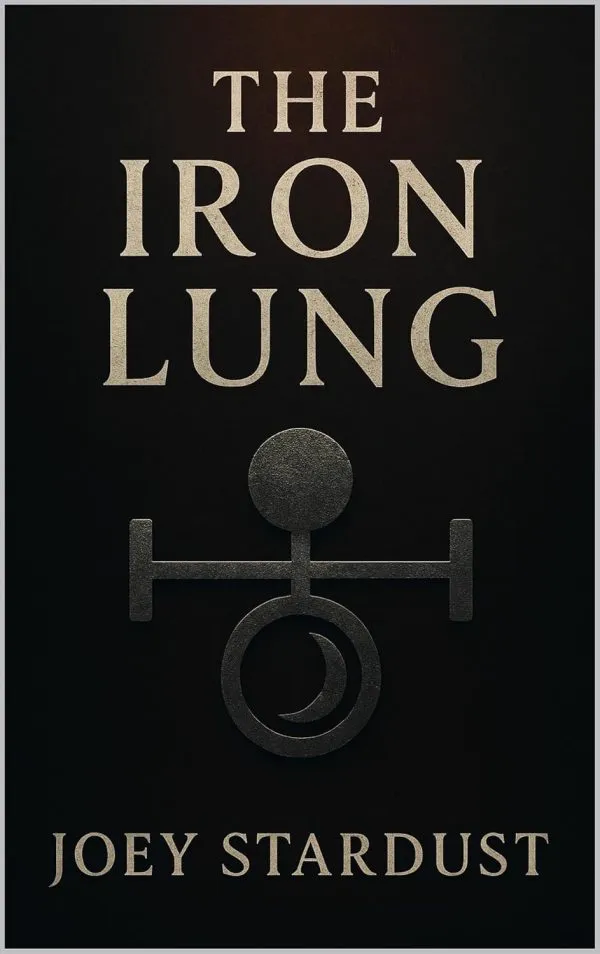
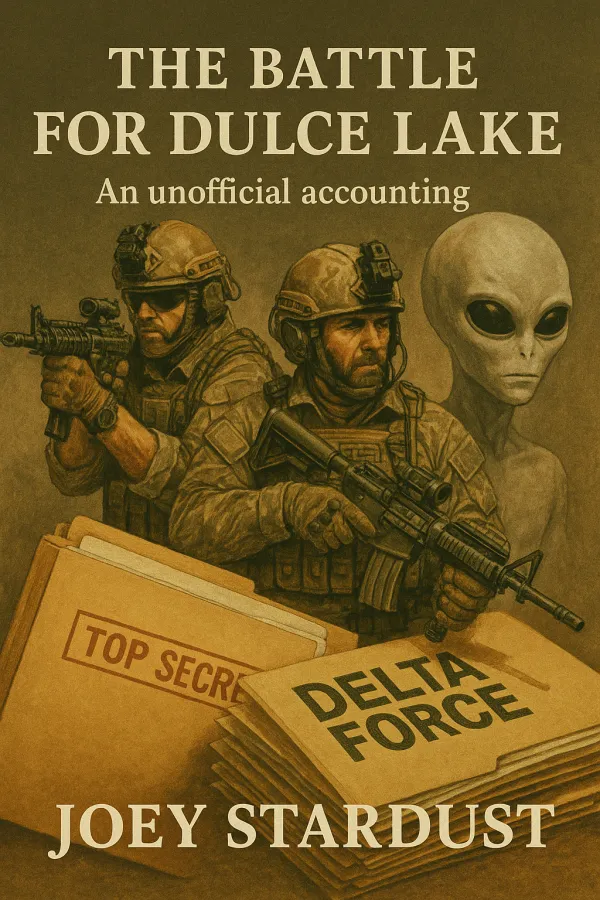
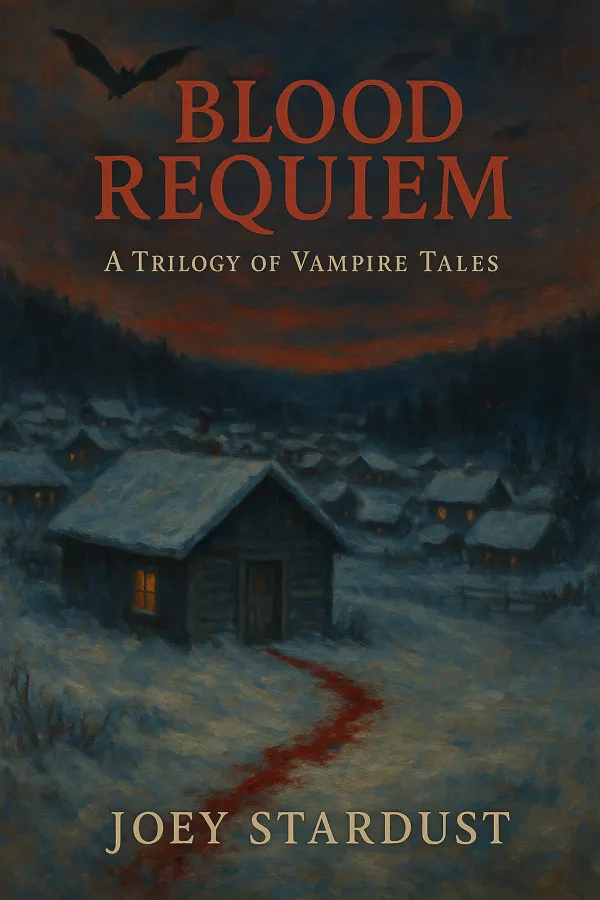
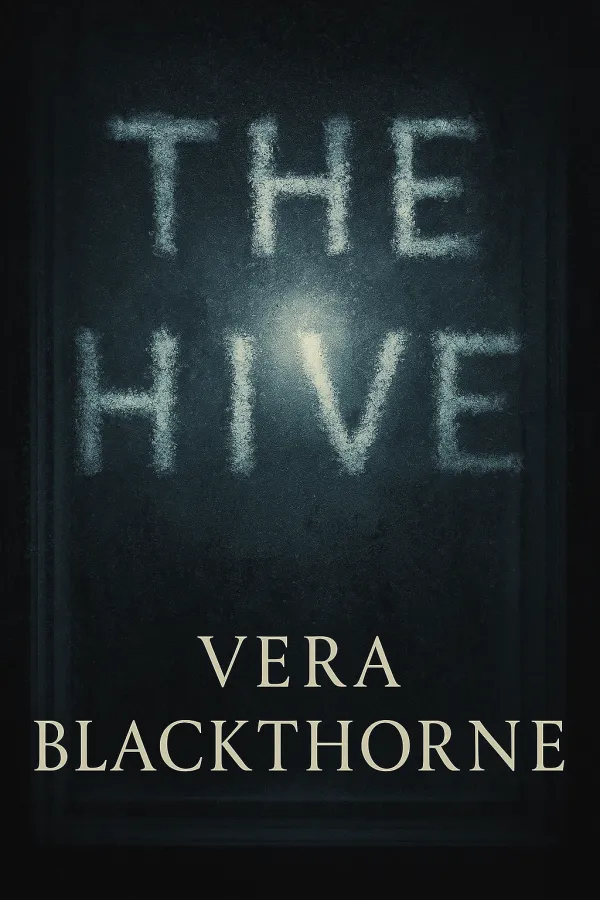
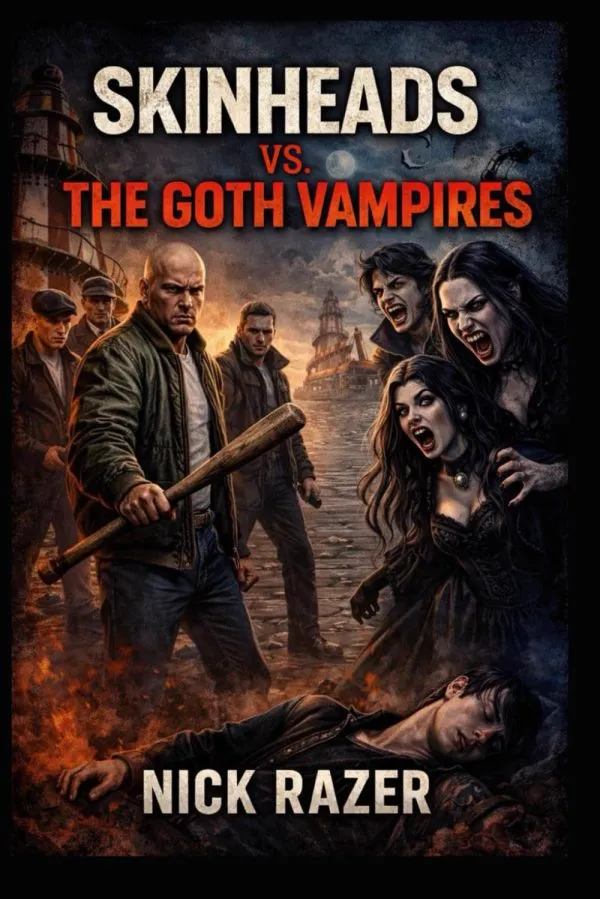
The contemporary horror catalog at Lurking Fear sits inside this pulp-horror lineage with absolute clarity. Lurker Pines reads like a lost Tor paperback from 1986. Texas Alien Abductions channels the same paranoid 1970s energy as Whitley Strieber's Communion. Salt Wife, Iron Lung, Dulce Lake, Blood Requiem, The Hive, Skinheads vs Gothic Vampires, The Dollmaker's Apprentice and Children of the Batcave all carry the format-honest, atmosphere-first DNA of the 1980s paperback horror boom.
5. Crime Fiction: From Hardboiled Pulp to Paperback Original
Crime fiction has the deepest and most unbroken pulp lineage of any genre. The hardboiled tradition was effectively invented in Black Mask magazine in the 1920s by Carroll John Daly, then perfected by Dashiell Hammett (Red Harvest, 1929; The Maltese Falcon, 1930) and Raymond Chandler (The Big Sleep, 1939; Farewell, My Lovely, 1940). By 1950 those writers were canon, and a new generation was already taking the form into the paperback era.
Mickey Spillane published I, the Jury in 1947, but it was the 1950s paperback reissues — and the Mike Hammer sequels (My Gun Is Quick, Vengeance Is Mine!, Kiss Me, Deadly) — that turned him into the bestselling American author of the decade. Spillane's brutal, fast, short-sentence style became the template for paperback crime.
Gold Medal Books, founded in 1950 specifically to publish original paperback novels (not reprints of hardcovers), changed the economics of crime fiction permanently. Suddenly a working writer could earn a living without ever appearing in hardcover. The result was the greatest concentration of crime-writing talent in the genre's history: Jim Thompson (The Killer Inside Me, 1952; The Grifters, 1963), David Goodis (Down There, 1956), John D. MacDonald (the Travis McGee series, 1964 onward), Charles Williams, Day Keene, Lionel White, Peter Rabe and Donald Hamilton (the Matt Helm series, 1960 onward).
Patricia Highsmith published Strangers on a Train (1950) and The Talented Mr. Ripley (1955), bringing psychological complexity to the form. Chester Himes wrote his Harlem Detective novels (A Rage in Harlem, 1957; Cotton Comes to Harlem, 1965) for French publisher Gallimard's Série Noire — a reminder that the pulp economy was always international. Ed McBain's 87th Precinct novels (1956 onward) invented the modern police procedural. Donald Westlake, writing as Richard Stark, launched the Parker series (The Hunter, 1962) and produced one of the cleanest, most influential crime prose styles in American literature.
The 1970s and 1980s belong to Elmore Leonard, James Crumley, George V. Higgins, Lawrence Block, Sue Grafton, Sara Paretsky, James Ellroy, Joseph Wambaugh, and Tony Hillerman. Ellroy's The Black Dahlia (1987) and L.A. Confidential (1990) are the period's last great paperback-original masterpieces, and they directly birthed the prestige-TV crime aesthetic of The Wire, True Detective, and Mindhunter.
The crime tradition is alive and well in the modern indie scene. The Prade Contract, The Auction Protocol, The Long Game, The Chenelle Code, Conspiracy, Hidden Blades, Model Mystery, The Weaver's Web, 'Ndrangheta and The Lace Maker's Silence — all in the Lurking Fear catalog — are paperback-original crime novels in the truest 1970s Gold Medal sense: lean, plotted, atmospheric, and written for readers who actually like to read.
6. Fantasy: Sword, Sorcery, and the Tolkien Aftershock
Fantasy spent most of the 1950s in commercial purgatory. Robert E. Howard had created Conan in the early 1930s, Fritz Leiber had introduced Fafhrd and the Gray Mouser in 1939, and J.R.R. Tolkien had published The Hobbit in 1937 and The Lord of the Rings in 1954–55. But none of them were paperback bestsellers yet. That changed in 1965, in two events that genuinely altered publishing history.
First, Lancer Books began reissuing the Conan stories in paperback, with extraordinary cover paintings by Frank Frazetta. Frazetta's Conan covers — muscle, sword, snarling beast, swooning woman — defined what fantasy looked like for the next thirty years and arguably created the visual grammar of every heavy metal album cover ever made. Second, Ace Books published an unauthorized U.S. paperback edition of The Lord of the Rings, forcing Ballantine to issue an authorized one in 1966. Tolkien's books sold millions of paperback copies across the late 1960s, often to college students who experienced them as countercultural texts.
The result was the modern fantasy genre. Lin Carter edited the Ballantine Adult Fantasy line (1969–1974), which rescued or introduced E.R. Eddison, Lord Dunsany, William Morris, James Branch Cabell, Hope Mirrlees, Mervyn Peake, and Clark Ashton Smith to a paperback audience. Michael Moorcock's Elric of Melniboné stories (collected and reissued throughout the 1970s) defined sword and sorcery's antihero strain. Roger Zelazny's Nine Princes in Amber (1970) and the Amber Chronicles ran through 1991. Jack Vance's The Dying Earth, Lyonesse, and Cugel cycles created the wry, baroque high-fantasy voice that everyone from Gene Wolfe to George R.R. Martin would later borrow. Ursula K. Le Guin's Earthsea sequence (1968–2001) raised the prose bar permanently.
The late 1970s and 1980s industrialized fantasy. Terry Brooks's The Sword of Shannara (1977) was the first mass-market fantasy novel to hit the New York Times bestseller list. Stephen R. Donaldson's Lord Foul's Bane (1977) launched the Thomas Covenant cycle. David Eddings, Raymond E. Feist, Tad Williams, Glen Cook (The Black Company, 1984), Robin Hobb's predecessors, and Mercedes Lackey all published into a paperback fantasy market that DAW, Del Rey, Ace, Tor and Bantam Spectra had built into a juggernaut. Tanith Lee, Patricia A. McKillip, Jane Yolen, and C.J. Cherryh kept the prose ambitious. Robert Jordan published The Eye of the World in 1990, just outside our window, and the rest is history.
The contemporary indie fantasy on the Lurking Fear list — The Embered Pact, Fire and Blood, Blood Roses, Skull and Bones, Song of Silence, Silent Spring, The Puppet Master's Secret — keeps faith with this lineage. They are character-driven, emotionally serious, atmospherically dense, and written with full awareness that fantasy readers are some of the most loyal and literate readers in the world.
7. The Cover Art Was the Marketing — and the Art Form
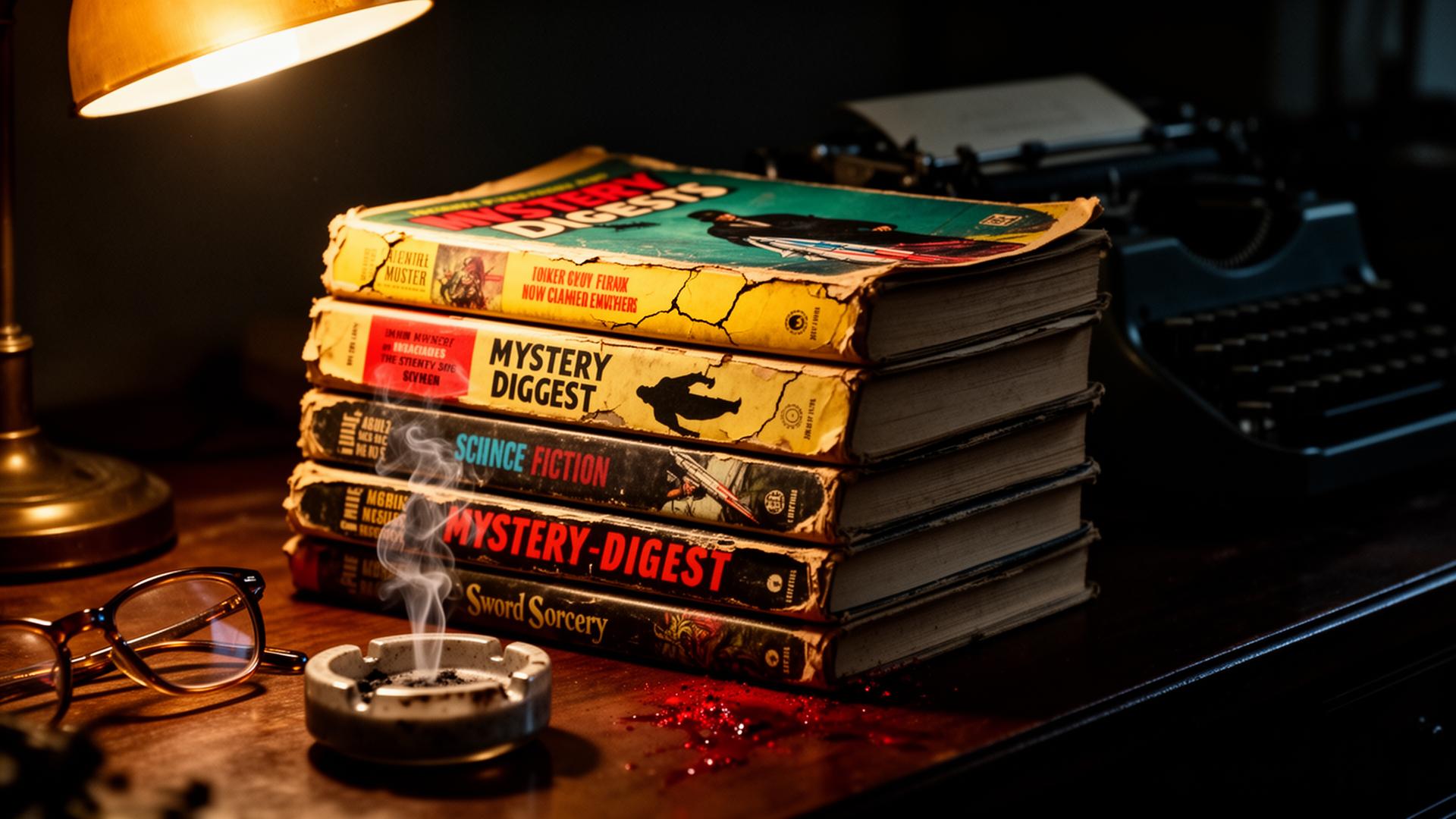
You cannot talk about pulp paperbacks from 1950 to 1989 without talking about the painted covers. They were the entire marketing apparatus of the genre. Wire racks at drugstores held hundreds of titles spine-out; only the front-facing handful had any chance of catching a reader's eye. The cover had to do everything in two seconds.
The illustrators who did that work are now recognized as some of the most important commercial artists of the twentieth century. Frank Frazetta defined fantasy. Richard Powers gave 1950s SF its surreal abstract vocabulary. Ed Emshwiller ("Emsh"), Wally Wood, Kelly Freas, Virgil Finlay, Ed Valigursky, Jack Gaughan, Vincent Di Fate, Michael Whelan, Boris Vallejo, Don Maitz, Rowena Morrill, Darrell K. Sweet and Jim Burns built the visual identity of paperback SF and fantasy. James Bama painted nearly every Doc Savage Bantam reprint in the 1960s. Robert McGinnis painted thousands of crime, mystery, romance and Bond paperback covers. Robert Maguire and Barye Phillips defined the Gold Medal crime look.
This is why vintage paperback collecting is now a legitimate art market. People are not just buying nostalgia — they are buying the largest open-air museum of mid-century commercial illustration in existence.
8. Distribution, Censorship, and the Death of the Spinner Rack
The pulp-paperback economy ran on the spinner rack. Independent distributors trucked titles to drugstores, bus stations, supermarkets, airports and newsstands, then trucked the unsold copies back, ripped the covers off as proof of return, and pulped the books. (This is the origin of "stripped" paperbacks, which still appear in used bookstores today and are technically stolen property.)
That distribution system began collapsing in the late 1970s as the chain bookstore — B. Dalton, Waldenbooks, then Barnes & Noble and Borders — replaced the independent magazine distributor as the dominant retail channel. Chain stores ordered fewer titles in higher quantities, killed midlist authors, and ended the era of the working professional who could earn a living off three paperback originals a year. By the late 1980s, the model was effectively dead. The mass-market paperback shrank, then collapsed, and the spinner rack disappeared from American life.
Censorship pressure also shaped the period. The 1954 Comics Code is well known; less remembered is the parallel pressure on lurid paperback covers and titles, which led publishers to tone down imagery in the late 1950s before swinging hard the other way during the sexual revolution of the late 1960s. Paperback originals were where the cultural fight over what was permissible to depict in mass-market American storytelling was actually fought.
9. Why the Pulp Era Still Defines Genre Storytelling in 2026
Almost every successful piece of contemporary genre culture is a direct descendant of the 1950–1989 paperback world. Star Wars (1977) is Edgar Rice Burroughs's John Carter plus Frank Herbert's Dune plus Akira Kurosawa, packaged with the visual energy of a Frazetta cover. Alien (1979) is A.E. van Vogt's "Black Destroyer" (1939) and Heinlein's The Puppet Masters (1951) reanimated by H.R. Giger. Blade Runner (1982) is Philip K. Dick filtered through Raymond Chandler. The MCU is sixty years of Marvel comics built on pulp adventure formulas. John Wick is Richard Stark's Parker. True Detective is James Ellroy and Cormac McCarthy by way of Black Mask. Stranger Things is Stephen King and Steven Spielberg fan-fiction set in the actual decade the pulp paperback peaked.
The story patterns the pulps codified — the lone hero, the impossible mission, the haunted house, the doomed romance, the dying world, the conspiracy that goes all the way to the top — are now the default operating system of mainstream entertainment. They work because two generations of writers under brutal commercial pressure spent four decades stress-testing them.
10. The Modern Indie Pulp Renaissance
The pulp tradition never actually died. It went underground, then it went online, and now it has come back as the indie genre fiction scene. Print-on-demand killed the economic problem that destroyed the spinner rack — you no longer have to print 100,000 copies to break even. Direct-to-reader marketing replaced the lost distribution. Kindle and Kindle Unlimited recreated the cheap-and-fast reading experience that Gold Medal and DAW used to provide. The audience never left.
Lurking Fear Publishing was built explicitly inside this lineage. The catalog covers all four classic pulp genres at the same standard the masters set. In horror: Lurker Pines, Salt Wife, Iron Lung, Dulce Lake, Blood Requiem, The Hive, Texas Alien Abductions, Skinheads vs Gothic Vampires and The Dollmaker's Apprentice. In science fiction: Black Planet, Last Memory of Earth, The Fifth Ship, The Eve Project, Year of Arrival, Architect's Dawn, Vanguard Incident and Star Man. In fantasy: The Embered Pact, Fire and Blood, Blood Roses, Skull and Bones, Song of Silence, Silent Spring and The Puppet Master's Secret. In crime: The Prade Contract, The Auction Protocol, The Long Game, The Chenelle Code, Conspiracy, Hidden Blades, Model Mystery, The Weaver's Web, 'Ndrangheta and The Lace Maker's Silence.
These are not pastiche. They are working contemporary novels written under the same commercial-and-craft discipline that produced the originals — fast pace, real atmosphere, no wasted pages, no apology for being entertainment first.
11. How to Start Reading the Pulp Era Today
If you want to immerse yourself in the original material, the best entry points by genre are these:
Science fiction: Start with Bradbury's The Martian Chronicles, then read Bester's The Stars My Destination, Le Guin's The Left Hand of Darkness, Dick's Ubik, and Gibson's Neuromancer. That is a complete 1950s-to-1980s SF education in five books.
Horror: Start with Matheson's I Am Legend, then Jackson's The Haunting of Hill House, Levin's Rosemary's Baby, King's Salem's Lot, and Barker's Books of Blood. Five books, four decades, the entire arc of modern horror.
Crime: Start with Hammett's Red Harvest, then Chandler's The Long Goodbye, Thompson's The Killer Inside Me, MacDonald's The Deep Blue Good-by, and Leonard's City Primeval. You will never read a contemporary crime novel the same way again.
Fantasy: Start with Howard's The Coming of Conan the Cimmerian, then Leiber's Swords and Deviltry, Le Guin's A Wizard of Earthsea, Vance's The Dying Earth, and Cook's The Black Company. Sword, sorcery, and the literary tradition all in one syllabus.
Then walk into a used bookstore and look at the wire racks. Buy whatever the cover tells you to buy. That is exactly how readers did it in 1962, and it still works.
12. Sources and Further Reading
Histories: Lee Server's Encyclopedia of Pulp Fiction Writers, Robert Lesser's Pulp Art, Richard A. Lupoff's The Great American Paperback, Piet Schreuders's Paperbacks, U.S.A., Thomas L. Bonn's Heavy Traffic & High Culture: New American Library as Literary Gatekeeper in the Paperback Revolution. Genre studies: Mike Ashley's multi-volume The Story of the Science-Fiction Magazine, Stephen King's Danse Macabre (the single best book on twentieth-century horror), S.T. Joshi's Unutterable Horror, Bill Pronzini's Gun in Cheek (on bad crime fiction, which is hilarious and useful), Lin Carter's Imaginary Worlds (on fantasy). Cover art: Robert Lesser's Pulp Art, Lesley Cresswell and Steven Heller's Cover Story, the catalogs of Underwood Books for Frazetta, Whelan, Vallejo and Maitz. Periodicals: Locus magazine and the SF Encyclopedia online (sf-encyclopedia.com) for SF; Crime Fiction Reader and the Library of America's Crime Novels: American Noir of the 1930s-1950s anthologies for crime; Galactic Central (philsp.com) for the magazine indexes.
Read those, and you will understand not just where modern genre fiction came from, but where it is going next — because the indie publishers carrying the tradition forward in 2026 are reading exactly the same sources, learning exactly the same lessons, and writing exactly the same kind of books for a brand-new audience that has never stopped wanting what the pulps always delivered: a real story, told fast, with the lights low and the cover art doing half the work.
Browse the full Lurking Fear catalog at lurkingfear.com to find your next pulp paperback.
Share this article