The History of Stars Without Number: How Kevin Crawford Rebuilt the Sci-Fi Sandbox RPG
The History of Stars Without Number: How Kevin Crawford Rebuilt the Sci-Fi Sandbox RPG
In 2010, a single designer working under the imprint Sine Nomine Publishing quietly uploaded a free PDF to DriveThruRPG and, in doing so, redirected the entire course of independent science-fiction tabletop role-playing. The game was Stars Without Number. The designer was Kevin Crawford. Sixteen years later, Stars Without Number is arguably the most influential sci-fi RPG of the twenty-first century — the game that proved a solo designer could out-produce a major studio, that the Old School Renaissance could translate cleanly into space opera, and that a free core rulebook was not a marketing gimmick but a legitimate business model. This is its history.
1. The Pre-History: Traveller, D&D, and the OSR (1977–2009)
Stars Without Number does not exist without two long shadows: Classic Traveller (1977) from Game Designers' Workshop and the Old School Renaissance movement of the mid-2000s.
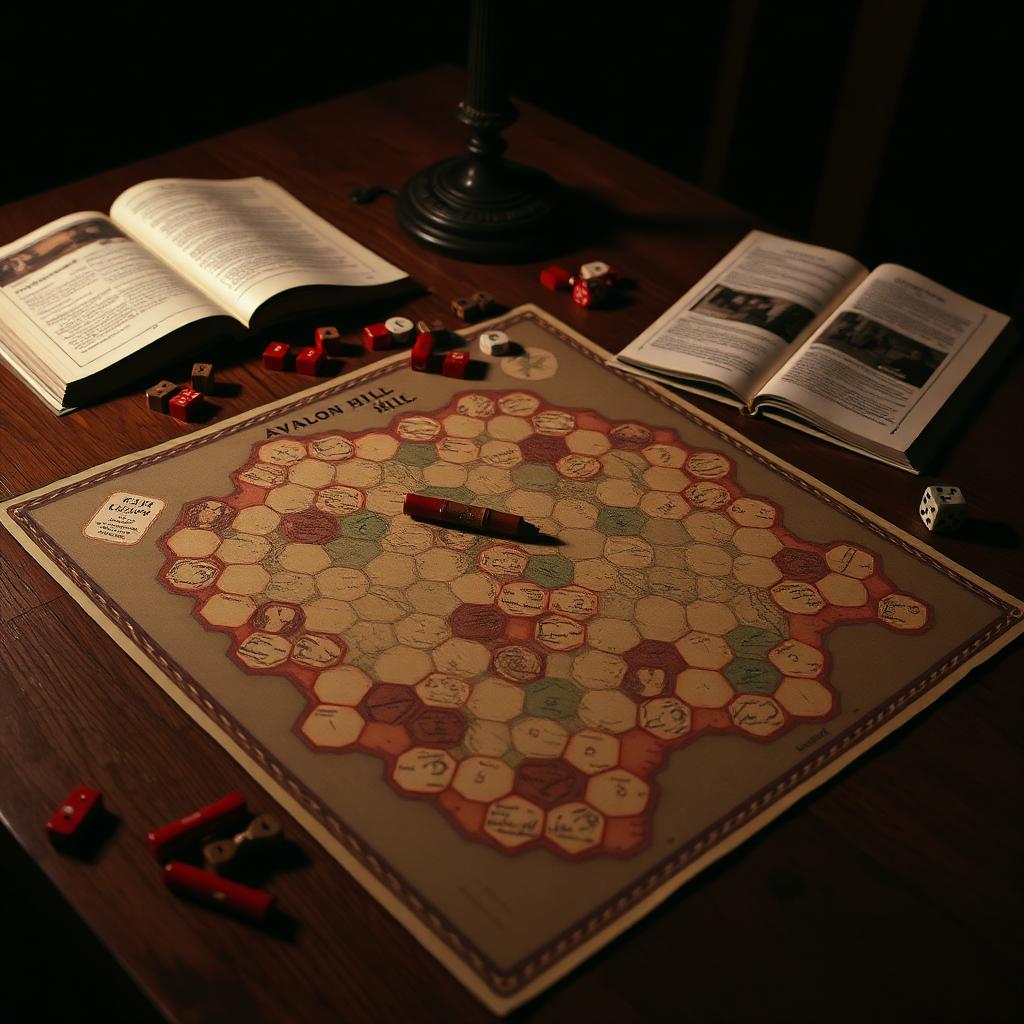
Classic Traveller, designed by Marc Miller and released in three little black books, established almost every convention modern sci-fi tabletop takes for granted — sector-based interstellar campaigns, subsector hex maps, world tags describing atmosphere and government, a lifepath character generator that could kill you before play began, and a lean 2d6 resolution system. Traveller was the sci-fi sandbox. But by the late 2000s the line had fragmented across multiple editions, licensees, and rules systems, and no single product served as an obvious entry point for a new GM who wanted to run a sector-hopping sci-fi campaign this weekend.
Meanwhile, the D&D side of the hobby was in the middle of the Old School Renaissance. Retroclones like OSRIC (2006), Labyrinth Lord (2007), and Swords and Wizardry (2008) had proven you could rebuild the pre-1989 D&D experience under the Open Game License, publish it cheaply, and build a genuine audience around lethal combat, class-based archetypes, and GM-facing sandbox tools. What the OSR did not yet have was a serious science-fiction game.
Kevin Crawford, working out of Massachusetts with a day job and no publishing infrastructure, saw the gap. He had been running long-running sci-fi campaigns for years and had built enormous stacks of GM tools — sector generators, world descriptors, faction sheets, adventure seed tables — to keep them alive. In late 2010 he decided to publish them.
2. The 2010 First Edition and the Free PDF That Changed Everything
The original Stars Without Number launched in October 2010 as a free 200-page PDF on DriveThruRPG, with a print-on-demand hardcover available at cost. The reception was immediate and disproportionate. Within weeks, the free PDF was in the platform's top downloads. Within months, the print edition was near the top of DriveThruRPG's sci-fi bestseller list. It has never really left.
The 2010 first edition established the design DNA that still defines the line: a d20 combat engine borrowed from Basic D&D, three classes (Warrior, Expert, Psychic), Traveller-style world tags, procedural sector generation, and — the innovation that made the game genuinely new — a fully worked-out Faction Turn where the GM runs the major powers of the sector between sessions using an asset-and-attribute system. The faction turn meant that a sandbox campaign no longer required the GM to improvise the entire background of the setting week to week. The sector had a heartbeat of its own.
The free-PDF model was not a loss leader. Crawford has repeatedly said in interviews and on the Sine Nomine podcast circuit that the free edition sells the print books, sells the supplements, and, most importantly, sells the follow-up games. It has funded a full-time career.
3. Building the Setting: The Scream, the Mandate, and the Postech Age
Stars Without Number's default setting is one of the game's quiet triumphs. It is specific enough to be evocative, sparse enough to leave room for the GM's own sector.
Roughly two thousand years in our future, humanity spread across the stars using the metadrive — a psionic-technological FTL system that required trained psychics at every node. This was the era of the Terran Mandate: a functional interstellar civilization, uneven but real. Then came the Scream.
Six hundred years before the default present, an unexplained psychic catastrophe swept known space. Every trained psychic in the galaxy either died, went catatonic, or was driven mad. The metadrive network collapsed. Worlds that had depended on off-world food, medicine, or spare parts collapsed with it. Some regressed to pre-industrial societies. Some devoured themselves. Some quietly went dark.
The default campaign is set six centuries into the recovery, in the postech age. Faster-than-light travel is possible again through the slower spike drive, sector governments have re-formed, and lost colonies are being contacted for the first time in twenty generations. Every star system has a story. Every ruin has a reason. The Scream is a piece of setting design so efficient that a GM can build an entire campaign from a single line of world description.
That's the sandbox Lurking Fear Publishing's own sci-fi novels — from Last Memory of Earth and The Fifth Ship to Star Man, Year of Arrival, and Architect's Dawn — share tonally. If you like postech ruins, generation ships, and the long shadow of a lost civilization, the crossover is immediate.
4. Sine Nomine's Golden Decade (2011–2016)
Between 2011 and 2016, Kevin Crawford, mostly working alone, published an astonishing run of Stars Without Number supplements and adjacent games under the Sine Nomine banner. Skyward Steel (naval campaigns, 2012). Darkness Visible (espionage, 2012). Suns of Gold (merchant campaigns, 2013). Hard Light (a full mini-campaign in a Venusian mining colony, 2013). Polychrome (a cyberpunk campaign supplement, 2013). Other Dust (the post-apocalyptic sister game set on lost Earth, 2011). Silent Legions (a Lovecraftian investigative RPG that shipped Crawford's sandbox tools to horror gaming, 2014).
Each of these books was, in the Sine Nomine house style, a self-contained tools-first sourcebook. Half GM guidance, half tables, all designed to be strip-mined for a home campaign. The community that formed around Crawford's work — the Sine Nomine subreddit, the Stars Without Number Discord, third-party modules on DriveThruRPG — treated these books less as products and more as gaming infrastructure.
The 2016 crowdfunding of Godbound (Crawford's mythic-fantasy RPG) confirmed the model at industrial scale. It funded above target on Kickstarter and cemented Sine Nomine as one of the most reliably delivered indie RPG publishers in the business.
5. The 2017 Revised Edition
By 2016, the 2010 first edition was showing wear. The class list needed expansion. The starship combat rules needed a rewrite. Psychic disciplines needed rebalancing. The Faction Turn had been refined across half a dozen supplements and deserved to be baked into the core book.
Stars Without Number: Revised Edition launched on Kickstarter in early 2017, funded within twenty-four hours, and delivered — on time, which for tabletop crowdfunding is genuinely notable — later that year. The Revised Edition is the version most players today mean when they say "SWN." It ships in two flavors: a Free Edition with the complete core rules, and a Deluxe Edition with the psychic classes, transhuman rules, and expanded GM material.
Revised also codified the "Without Number" line as a shared engine. Worlds Without Number (fantasy, 2020) and Cities Without Number (cyberpunk, 2023) use the same character math, the same faction turn, and the same tools-first structure. A GM who has learned one has effectively learned all three.
6. Third-Party Modules and the Living Sector
Because Stars Without Number: Revised Edition was released under an open license — Crawford has consistently been generous with third-party permissions — a substantial third-party scene has grown up around the game. DriveThruRPG's SWN category has hundreds of community modules. Many of them are quick one-page factions or system generators. A smaller number are full adventures.
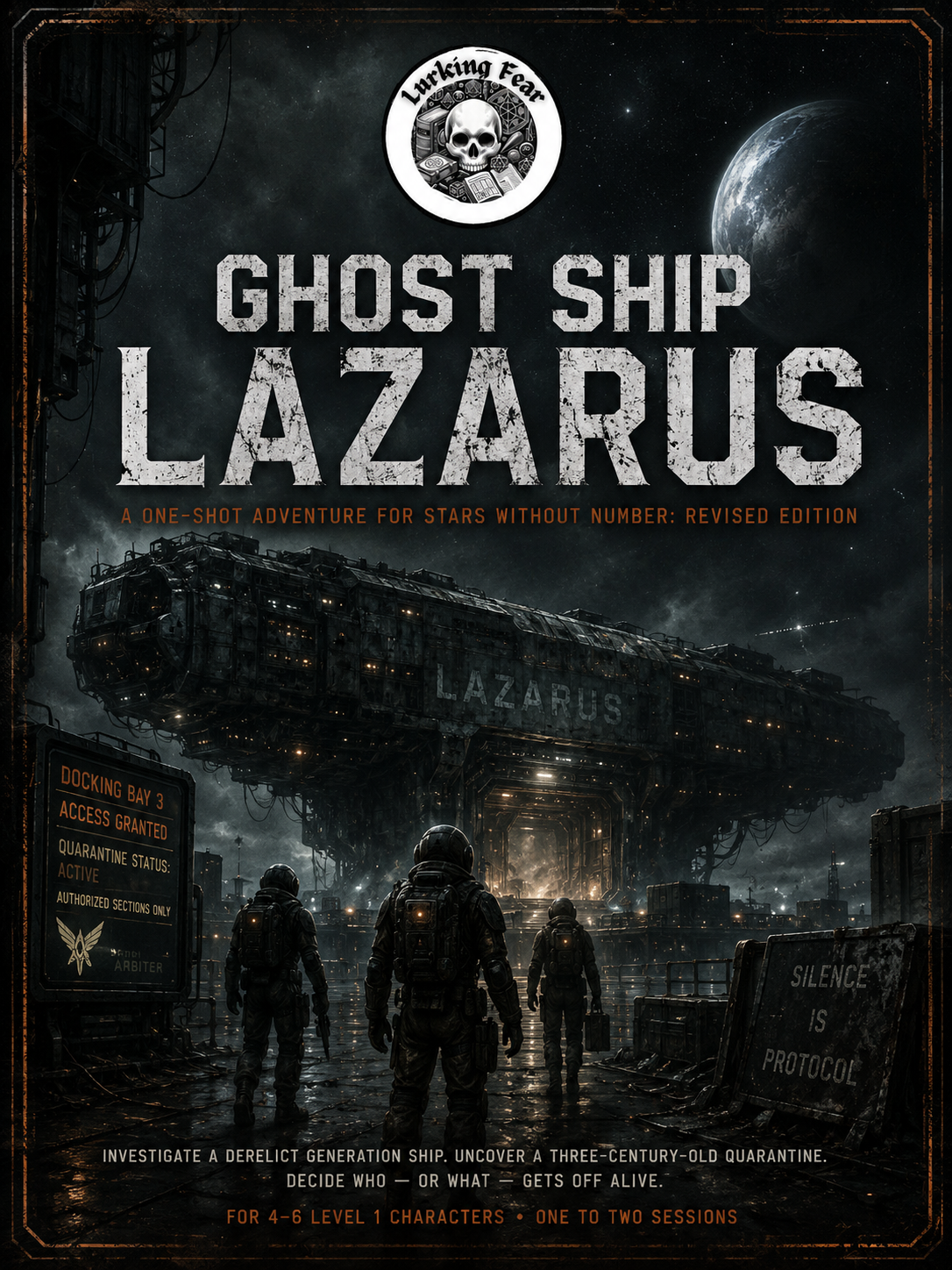
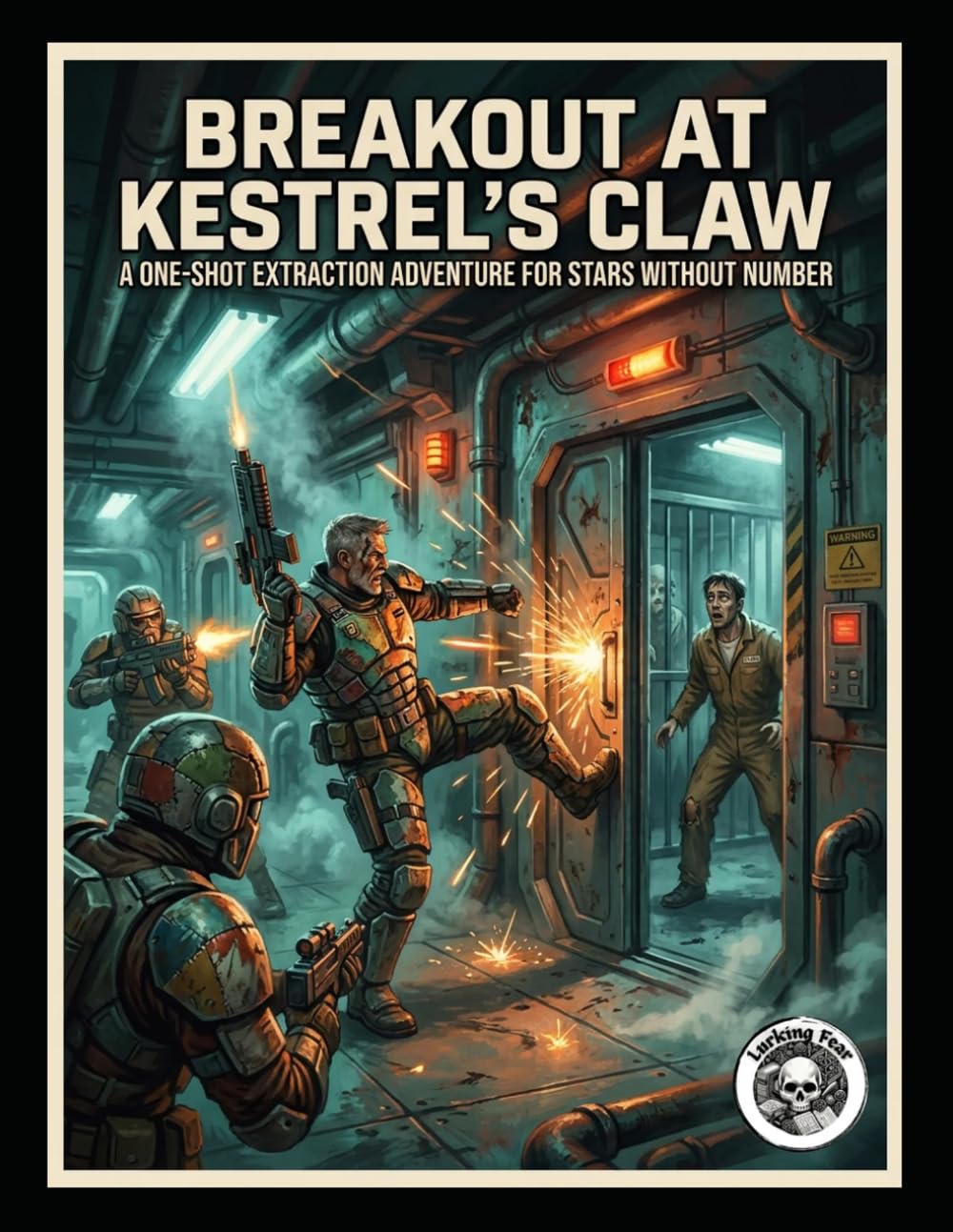
Lurking Fear Publishing publishes in this space. Ghost Ship Lazarus is a slow-burn sci-fi horror module in which a Mandate-era generation ship, silent for three centuries, suddenly answers its own distress beacon. It is written in the tradition of Alien, Event Horizon, and Dead Space and leans directly on the Scream backstory that gives SWN its atmospheric weight. Breakout at Kestrel's Claw is the opposite tonal register — a cinematic extraction adventure aboard a hostile mercenary cruiser, playable as a one-shot or as a 2–3 session mini-campaign, with multiple infiltration paths and a mission clock that keeps the pressure on. Both are written for Revised Edition and drop cleanly into any existing sector.
If you're looking for a broader reading list to sit alongside the tabletop, our science-fiction line — Last Memory of Earth, The Fifth Ship, Star Man, Vanguard Incident, The Eve Project, Year of Arrival, Architect's Dawn, and Black Planet — reads in the same postech, lost-civilization key. If you liked the derelict-ship horror of Ghost Ship Lazarus, Iron Lung and Blood Requiem from our horror catalog land in adjacent territory.
7. Why Stars Without Number Won
Sixteen years in, Stars Without Number is not the largest sci-fi RPG on the market by revenue — Starfinder and the various Star Wars licenses probably still take that crown. But it is arguably the most influential, and it is unquestionably the sci-fi game most GMs actually run.
Three reasons stand out.
First, the tools. No other sci-fi RPG ships as many usable GM tools per page. Sector generators, world tags, adventure hooks, faction turns, corporate seeds, ruin generators — every chapter is designed to be a table you can roll on when you're prepping Wednesday's session on Tuesday night.
Second, the license and the price. A free core PDF plus permissive third-party rules meant that the community could build outward without asking permission. That is exactly how the OSR grew D&D-adjacent gaming a decade earlier, and it worked again here.
Third, the voice. Crawford writes GM advice as though he's actually run the game — because he has, for decades. Read the Deluxe Edition's chapter on running a sandbox campaign and you are reading a working document from a Game Master who has already made every mistake you're about to make.
The result is a game that a single designer built, that a global community expanded, that has spawned an entire line of shared-engine games, and that in 2026 is still the default answer to the question "what should I run for a sci-fi campaign?"
8. Where to Start
If you have never played SWN, download the Free Edition of Stars Without Number: Revised Edition from DriveThruRPG (https://www.drivethrurpg.com/product/230009), roll a sector, populate it with a few factions, and run a one-shot. If you want a ready-to-play horror module for that first session, Ghost Ship Lazarus is designed for exactly this — four to six Level 1 characters, one long session or two shorter ones, no prior campaign context required. If your table prefers action to atmosphere, Breakout at Kestrel's Claw gives you a cinematic extraction with a running clock and multiple paths through the ship.
From there, the sector is yours. That, in the end, is the whole point of what Kevin Crawford built.
Written by Joe Murphy. Managed by The Real Social Company.
Share this article
Books Mentioned in This Article
Ghost Ship Lazarus - A Stars Without Number Module
Breakout at Kestrel's Claw - A Stars Without Number Module
The Iron Lung
Blood Requiem: A Trilogy Of Vampire Tales
The Last Memory Of Earth: Book 1 Of The Entropy Archives
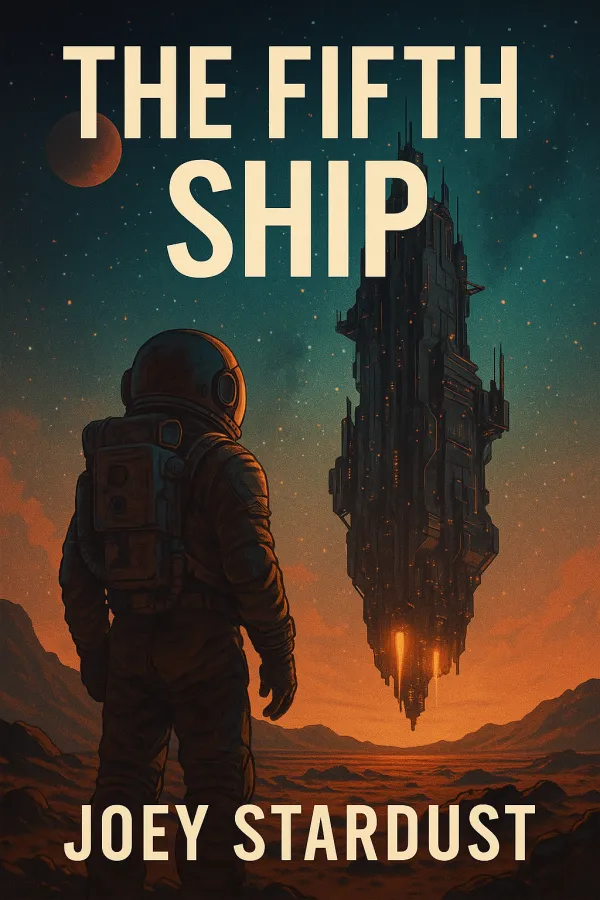
The Fifth Ship
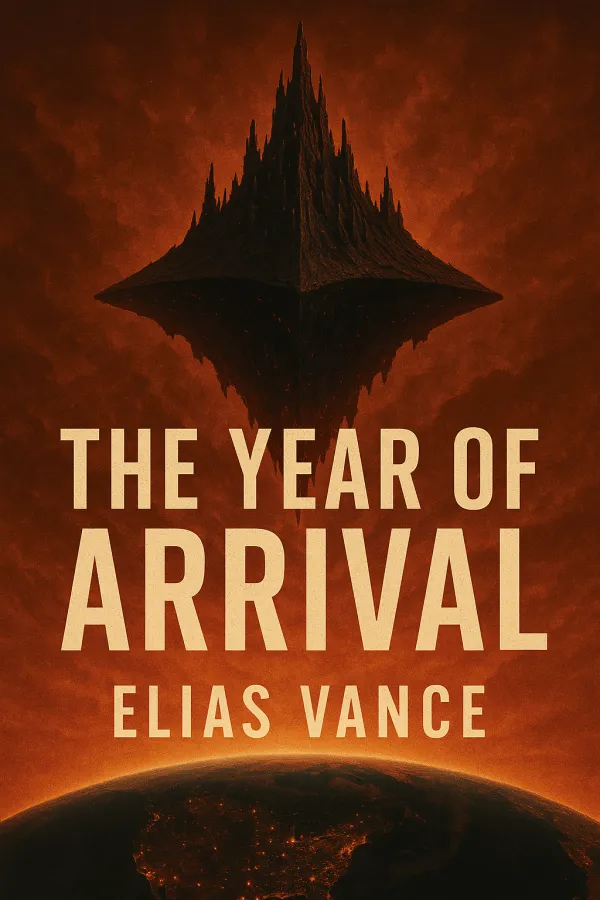
The Year Of Arrival
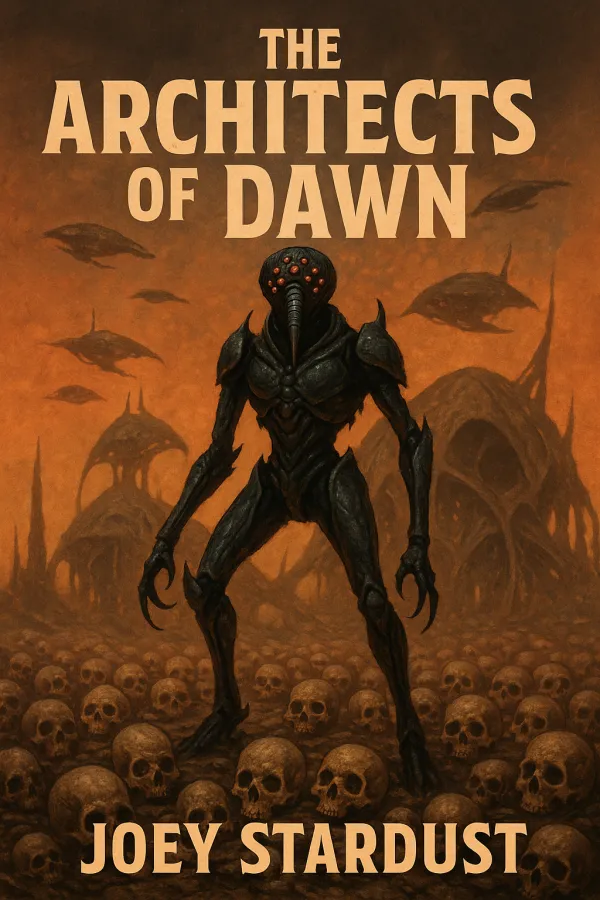
The Architects of Dawn: Book 2 – The Entropy Archive
About the Author

Joe Murphy
Joe Murphy (writing as Joey Stardust) is a creative professional from Columbus who weaves together experience in branding, education, and industry to tell stories that inform, intrigue, and inspire. With a foundation built on working with diverse creative projects, he merges his passion for design and narrative to build strong, memorable identities.
View Author Profile →