A Field Report from the Backrooms: History, Levels, Entities, and What We Have Learned by 2026
A Field Report from the Backrooms: History, Levels, Entities, and What We Have Learned by 2026
I have spent eleven years cataloguing the Backrooms. That sentence still reads, to most people, as either a joke or a symptom, and I have made peace with both readings. What follows is the shortest honest summary I can write of what my colleagues at the Lurking Fear Research Consortium and I have actually documented between 2015 and 2026 — a period during which the Backrooms went from an imageboard curiosity to a body of field data serious enough to warrant a 640-page reference volume. That volume, Lurking Fear's Guide to the Backrooms & Their Inhabitants, is the source I will refer to throughout; this article is a distillation intended for readers who want the field standing before they open the book.
1. What the Backrooms Actually Are
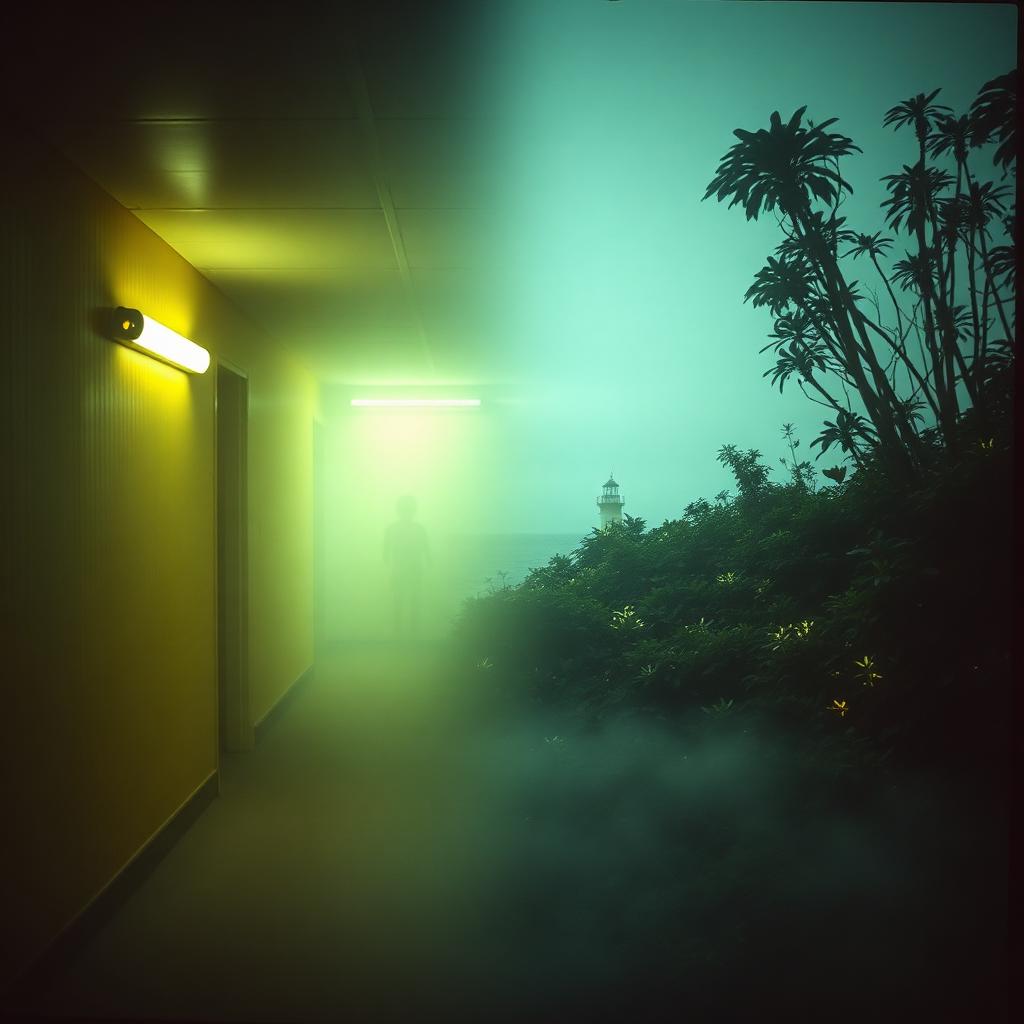
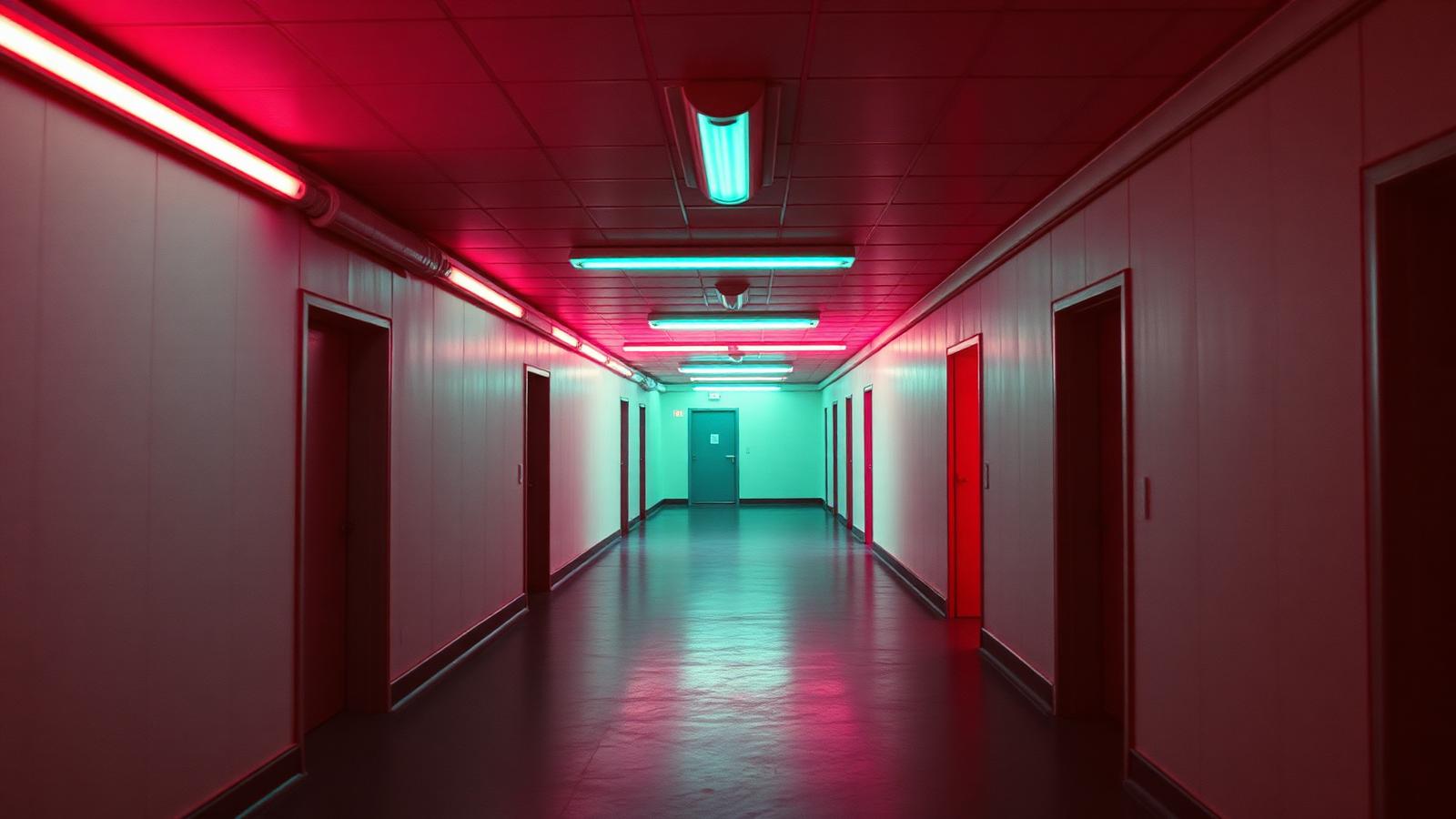
The layman's definition — "an infinite empty yellow office" — is a single Level of a much larger structure and is, in our current taxonomy, called Level 0. The Backrooms as a whole are better described as a set of overlapping non-Euclidean spaces that sit adjacent to consensus reality and are entered, almost always involuntarily, when a load-bearing spatial assumption in the ordinary world collapses. A staircase that should have terminated does not. A mirrored elevator surface indexes the wrong floor. A corridor turns a corner and, for reasons we still cannot model, resolves into a corridor that is not the one the walker was in three seconds earlier. The Consortium refers to this transition as *noclipping*, borrowed from the video-game term for a character passing through solid geometry. The word stuck because it was the only one that fit.
By August 2026 the archive lists 947 stable Levels, 63 entity classes, and roughly four thousand incident reports considered evidentially clean. A stable Level is one that at least three unrelated expeditions have re-entered on separate dates and described with sufficient overlap to be treated as the same place. Everything below that threshold sits in the provisional appendix.
2. A Short History of the Field, 2019–2026
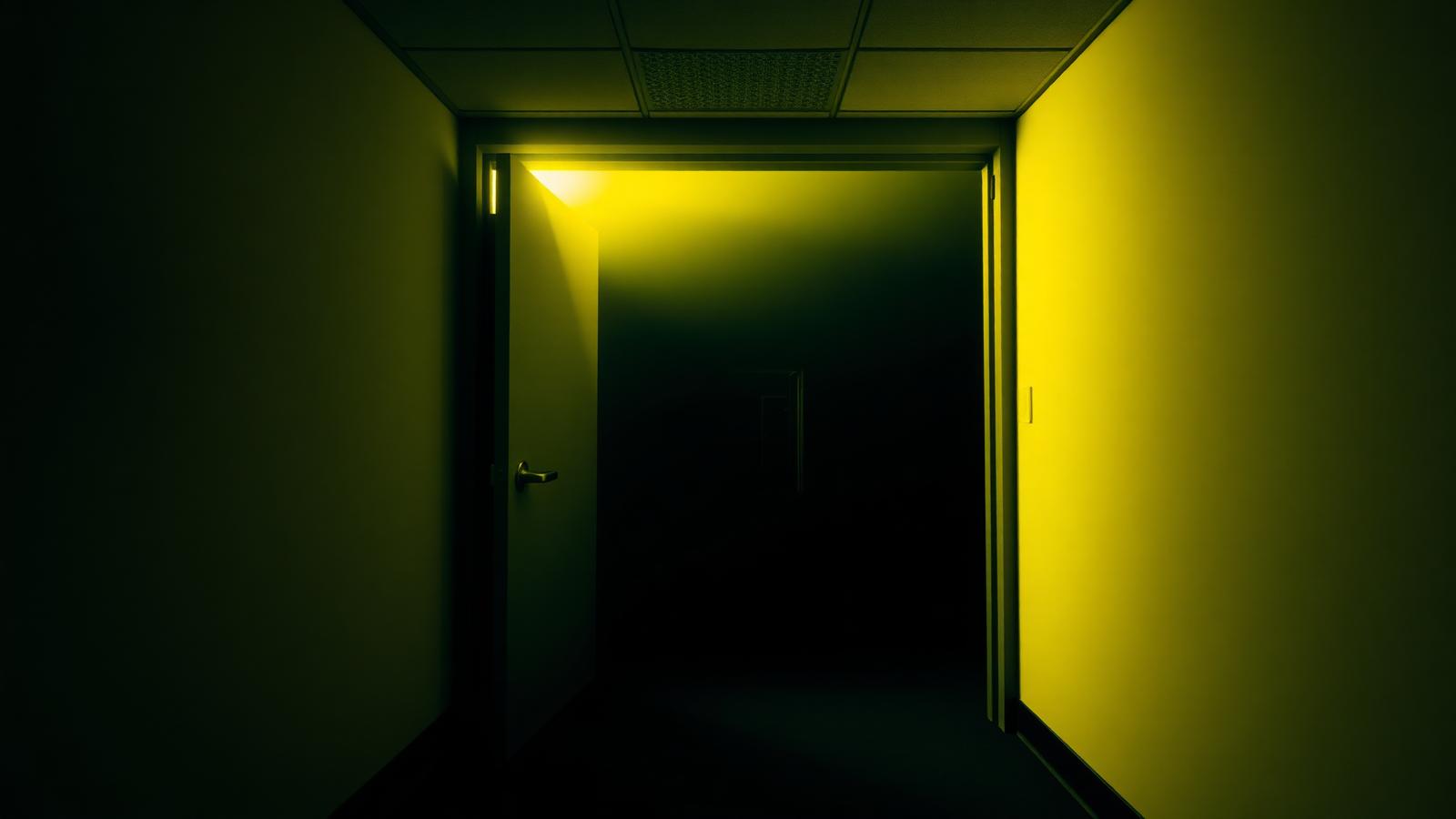
The public origin of Backrooms documentation is a single imageboard post from May 2019: a slightly-warped photograph of an empty yellow office corridor, uploaded without context. Within two weeks it had generated the first taxonomic conversations — what should we call this place, are there others, has anyone else been there — and within two months the first collaborative wiki had assembled a rudimentary Level index.
The field then moved through three distinct phases. The 2019–2021 folkloric phase, in which Levels were essentially collaborative fiction and entities were named by consensus. The 2021–2023 documentation phase, when the first equipped expeditions began returning with photographic material, magnetometer data, and — critically — repeatable entry protocols. And the 2023–present research phase, in which the Consortium and three peer organizations began treating the Backrooms as a bounded subject of study, with standardized reporting formats, incident classification, and a shared entity registry.
The 2026 field guide is the first attempt to publish the consolidated dataset as a single navigable reference. It is not the last word on the subject — the archive grows by roughly forty incident reports a month — but it is the first document I would place in a new researcher's hands.
3. The Level Taxonomy
Levels are catalogued by number, though the numbering is historical rather than topological — Level 0 is the entry-most Level for the majority of noclip events, but Levels 1 through 9 were named in the order they were documented, not in any spatial order. The current classification groups Levels into four broad tiers by survivability.
*Tier I, low-risk*: Level 0 (the yellow office), Level 1 (warehouse and parking structure), Level 2 (maintenance tunnels), and a handful of others. Ambient hostility is low, entity encounters are rare, and the primary danger is disorientation and the psychological effect of prolonged exposure to badly-lit repetitive geometry. Most noclip victims who return alive return from a Tier I Level.
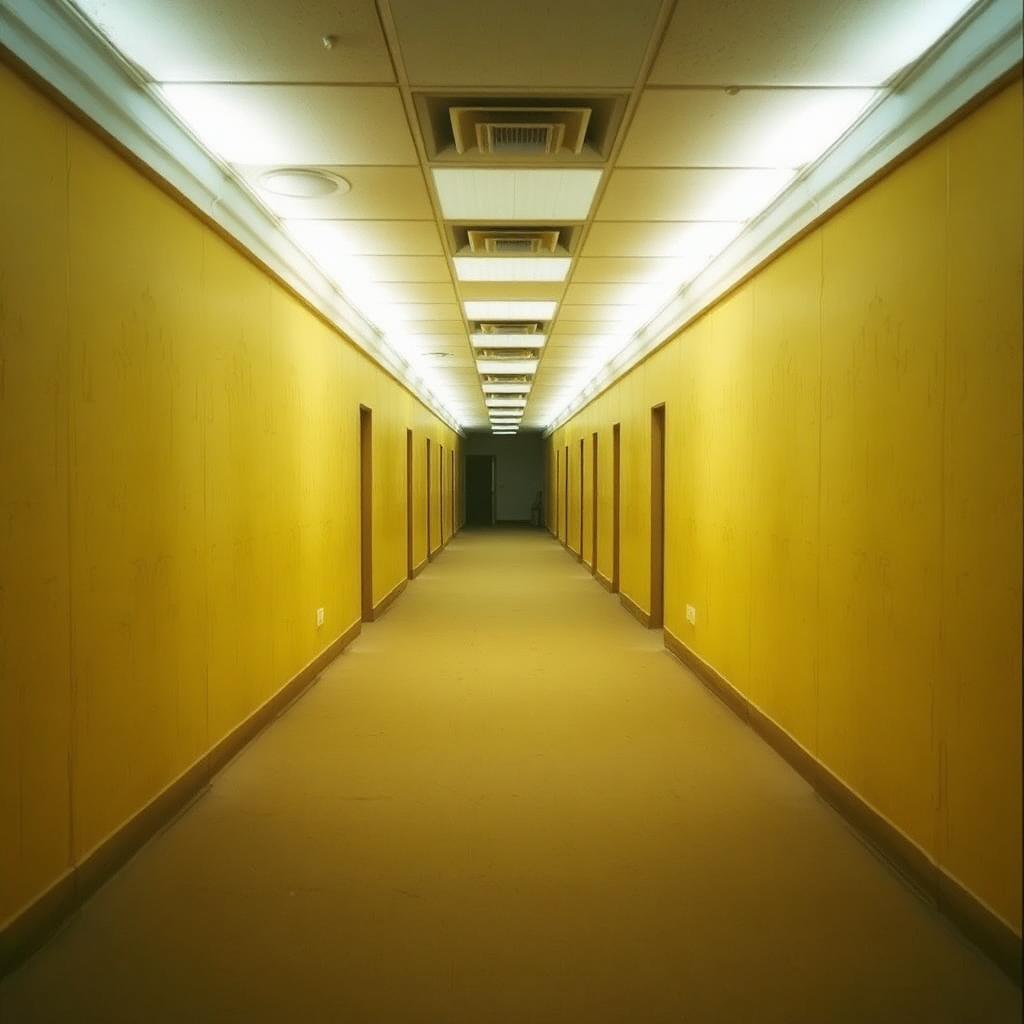
*Tier II, moderate-risk*: Level 3 (electrical station), Level 4 (abandoned office complex), Level 6 (lights-out), and Level 11 (endless city). Entity encounters are documented but avoidable with protocol adherence. Environmental hazards — running water contamination on Level 3, total darkness on Level 6 — are the primary killers.
*Tier III, high-risk*: Level 5 (grand hotel), Level 7 (thalassophobic flooded corridors), Level 9 (suburban), and the notorious Level Fun (=). Tier III Levels combine hostile entities with environmental hazards and, in the case of Level Fun, actively deceptive architecture. Casualty rates in this tier climb sharply.
*Tier IV, extreme*: Level !, Level 94, Level Run For Your Life, and a small number of numbered anomalies whose behavior does not stabilize between expeditions. These Levels are not recommended for entry under any protocol, and the field guide's entries for them are documentation-only, not survival-oriented.
The full 947-Level taxonomy is in the field guide, organized by tier, with entry vectors, atmospheric composition, water availability, and known-safe transit paths where such paths exist.
4. The Entity Registry
The 63 catalogued entity classes fall into six behavioral families. I will describe the four families a returning noclip victim is most likely to have encountered, because those are the ones the survival protocols are actually built around.
*Passive fauna*: Wretches, Deathmoths, and the ambient microbial communities that make Almond Water potable. These entities do not target humans and are frequently symbiotic; the field guide contains identification plates for the edible and inedible members of each class.
*Territorial ambulants*: Hounds, Skin-Stealers, Facelings, and the family of upright quadrupeds catalogued as Class 5. These entities defend a territory rather than actively hunt. They will kill an intruder who violates their space and ignore one who does not. Protocol here is straightforward: do not enter marked or fouled zones, do not run, do not make direct eye contact with Facelings.
*Active predators*: Smilers, Partygoers, and the vocal mimics catalogued as Class 8. These entities hunt. They are the entities the popular Backrooms lore has focused on almost exclusively, and the popular lore is, on this narrow point, correct — a Smiler encounter in an unlit corridor is one of the most lethal survivable events in the entire archive.
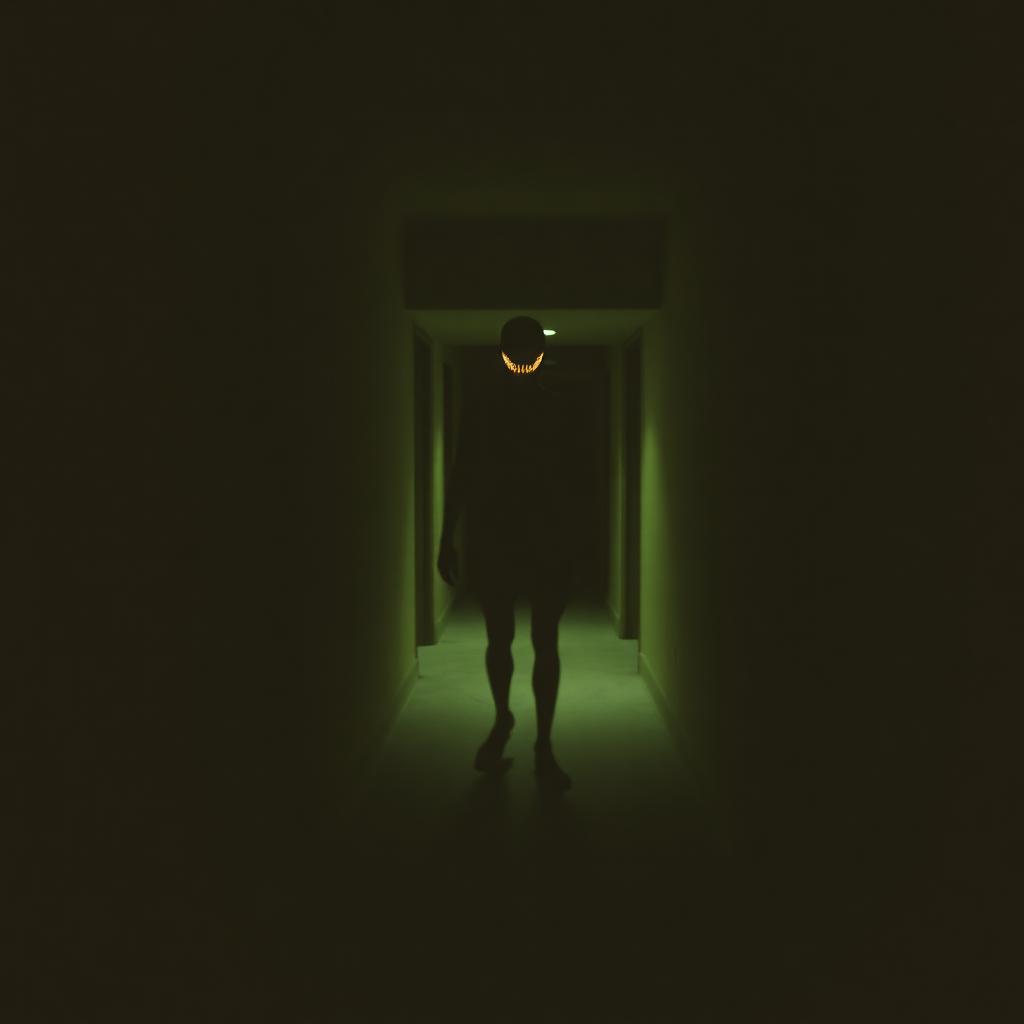
*Anomalous humanoids*: Partygoers on Level Fun, the Duller, the Wanderers of Level 11, and the group catalogued as Class 12 (former humans in stable transformation). These entities were, in most documented cases, human noclip victims whose exposure to a Level exceeded a threshold the Consortium has not yet been able to model. The ethical questions this raises are addressed in the field guide's Appendix D, and I will not attempt to summarize them here.
5. Survival Protocols
The field guide's protocol section runs to 84 pages. The compressed version, in the order a noclip victim should apply them, is this.
*First minute*: Do not run. Do not shout. Confirm you are alone. Note the direction you were facing at the moment of transition; the receiving Level's orientation is arbitrary but stable, and knowing which way you were pointed is the closest thing to a compass you will have.
*First hour*: Identify the Level. The field guide's frontispiece is a Level-identification flowchart designed to be used in low light and under stress; carry a printed copy. Locate a water source. Almond Water — the amber-tinted fluid found in vending fixtures on most Tier I and II Levels — is potable and mildly restorative; ordinary Backrooms water, particularly on Level 3, is not.
*First day*: Establish a static position in a non-corner, non-mirror location. Corners and mirrored surfaces are the two documented re-noclip vectors, and both are as likely to move you to a more hostile Level as to return you to the ordinary world. Wait. Roughly 62% of returns in the archive are involuntary and occur within the first 72 hours; movement does not accelerate this and often prevents it.
*First week and beyond*: If you have not returned within seven days you are effectively resident, and the survival calculus changes. The guide's residency chapters cover food acquisition, entity-avoidance routines, and — for the very small number of long-term residents who have made contact with the Consortium — the beacon and message-drop protocols that make eventual extraction possible.
A note on group behavior. The archive contains 214 multi-person noclip events, and the survival rate for groups is not, as intuition suggests, higher than for solo victims. It is roughly equal on Tier I Levels, meaningfully lower on Tiers II and III, and catastrophically lower on Tier IV. The dominant failure mode is not entity predation but social — one member breaks protocol, the group fractures, and the resulting movement produces the noise and disorientation that summon or attract hostile classes. The guide's Chapter 19 addresses group discipline explicitly, and it is the chapter I have watched save the most lives in the last four years.
A second note, on documentation. Every returning victim should, within the first 48 hours of return, write down everything they can remember while it is still remembered. Backrooms memory decays on a curve the Consortium has been able to measure — roughly 40% of specific architectural detail is lost within a week, and 70% within a month — and the earliest records are almost always the most useful. The guide includes a debriefing template on its inside back cover for exactly this purpose.
6. What We Still Do Not Understand
I want to close this report with the honest inventory of what remains unknown, because the popular Backrooms discourse has flattened the field into a set of confident claims that the underlying data does not support.
We do not know why some individuals noclip and others do not. Personality, mental state, physical exhaustion, and proximity to particular architectural features all correlate weakly; none predict.
We do not know whether the Levels are discovered or generated. Two competing models — the atlas model, in which the Levels are a pre-existing structure being progressively mapped, and the response model, in which the structure is generated in response to observation — remain compatible with the current dataset.
We do not know what the entities *are*. The behavioral taxonomy is robust; the ontology is not. A Smiler behaves consistently across encounters. What it is, whether it possesses interiority, whether it is a single entity or a class of instantiations, remain open questions.
And we do not know why the number of documented noclip events has risen roughly 400% since 2020. The correlation with the increase in liminal architecture in the built environment — empty malls, unfinished office towers, pandemic-era vacant interiors — is suggestive. Suggestive is not causal.
7. Reading the Full Guide
If this report has been useful, the Guide to the Backrooms & Their Inhabitants is the document to read next. It contains the full Level taxonomy, the entity plates and identification keys, the survival protocols in their unabridged form, and the appendices covering recovered documents, unresolved incidents, and the ethical framework the Consortium works under. It is the reference I would want in my hands if I were the one who had just noclipped.
For the wider intellectual context — the aesthetic and literary tradition the Backrooms sit inside — see the companion piece What Is Weirdcore?, which traces the same architectural dread through fiction rather than field data. Both articles, and the book, are attempts at the same thing: giving readers a form for describing rooms that have started to lie.
Stay in the middle of the corridor. Do not trust the mirrors. If you see a light at the end of a hallway that does not match the hallway's own lighting, turn around.
— Dr. Richard Clark, Lurking Fear Research Consortium, August 2026
Share this article
About the Author

Dr. Richard Clark
Dr. Richard Clark is a supernatural researcher, conspiracy theorist, and author whose life's work sits at the exact seam where reality begins to fray. For more than three decades he has documented the phenomena mainstream science refuses to name — non-Euclidean spaces, temporal slippage, hidden intelligences, and the institutional silence that surrounds all three. His investigations have taken him from decommissioned military installations in the American Southwest to abandoned Cold War listening posts in Eastern Europe, always chasing the same question: what if the walls of our world are thinner than we're told?
View Author Profile →