Two Boundaries, One Question: A Comparative Field Study of the Backrooms and Area X
Two Boundaries, One Question: A Comparative Field Study of the Backrooms and Area X
*Note on rights and framing.* Area X, the Southern Reach, the lighthouse, the Crawler, the biologist, and every other element of the Southern Reach material referenced below are the intellectual property of Jeff VanderMeer, first published in the novels **Annihilation**, **Authority**, and **Acceptance** (Farrar, Straus and Giroux, 2014) and continued in **Absolution** (2024). Full copyright in those works, characters, and settings belongs to Mr. VanderMeer and his publishers. This article uses them as the subject of comparative commentary only, in the same way a field ecologist might compare two published site reports. Nothing here claims authorship of, or rights to, the Southern Reach corpus. What follows is a research essay written *as if* both anomalies were documented reality, because the comparison is more useful when it is allowed to sit inside its own frame.
I have been asked, in almost every public talk I have given since the 2019 emergence of the Backrooms into serious discussion, the same question in four or five different shapes. The question is: *is Area X the same kind of thing as the Backrooms?* Sometimes it is asked with the assumption that both are literal. More often it is asked with the assumption that both are metaphors for the same underlying anxiety and that the comparison is therefore a literary one. I have avoided the question for a long time, because I did not think the Consortium's dataset was mature enough to answer it responsibly. In 2026, with 947 stable Backrooms Levels catalogued and eleven years of comparative reading of the Southern Reach's recovered material behind us, I think I can finally offer a partial answer.
The partial answer is: they are not the same thing, but they are the same *class* of thing, and the class is the important part.
## 1. What the two anomalies look like, side by side
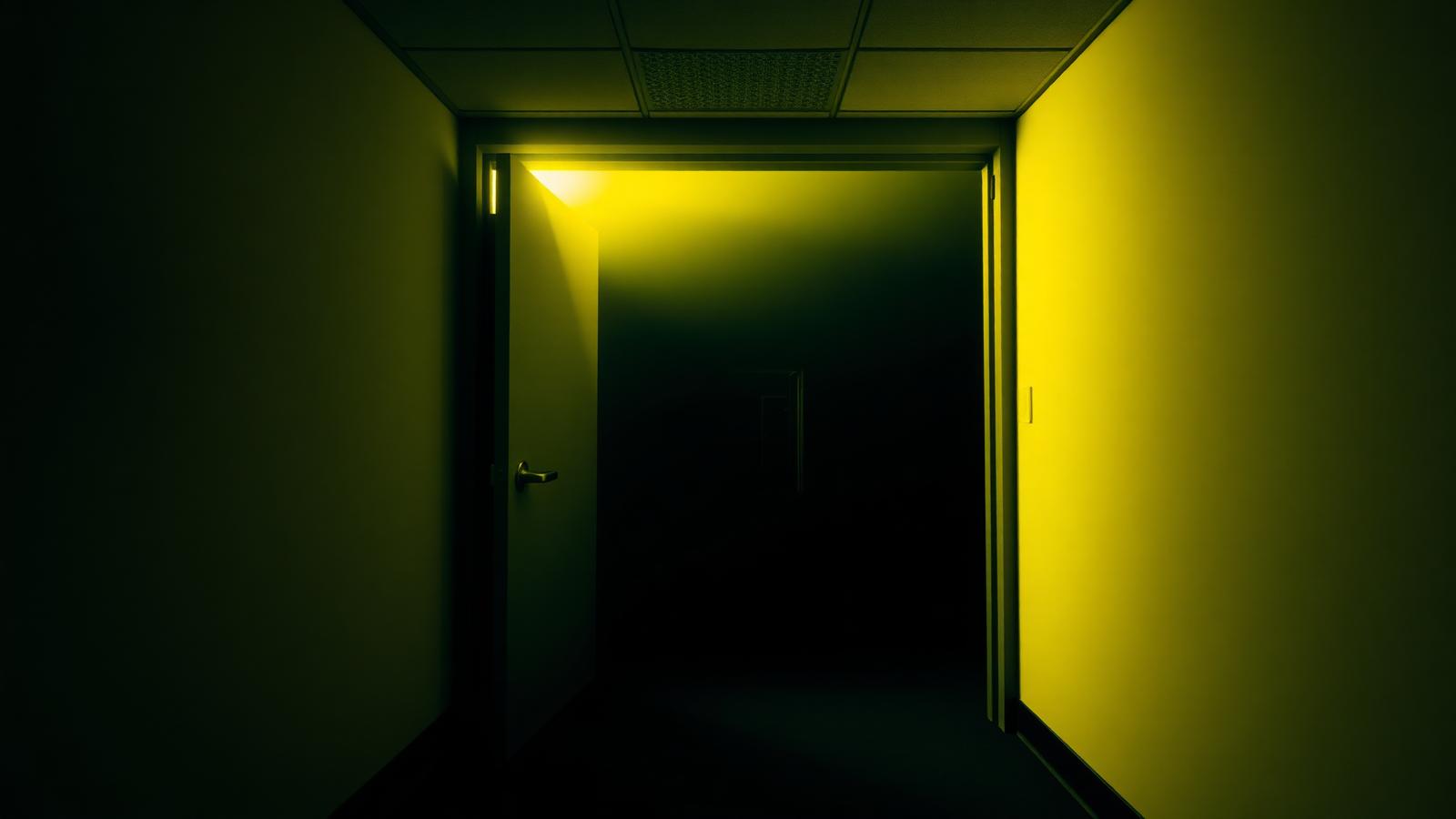
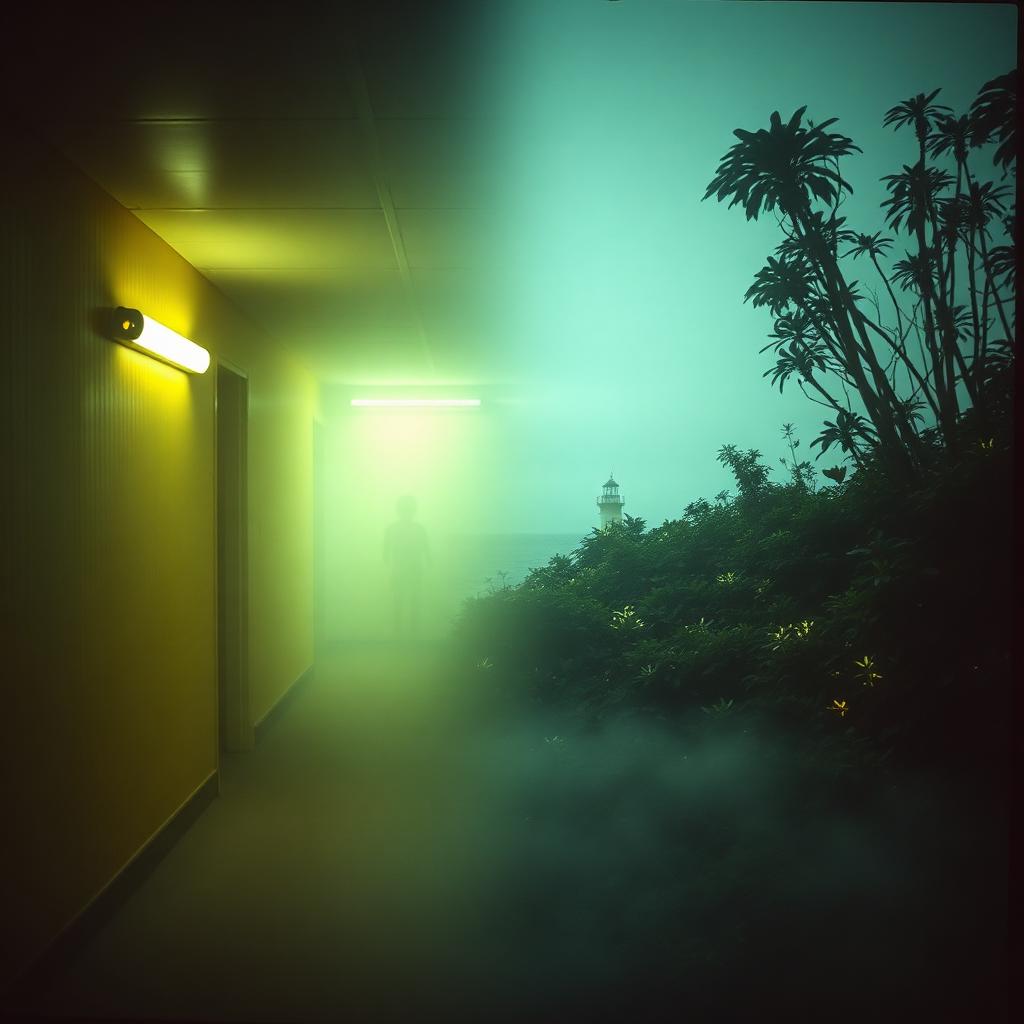
The Backrooms, as I described in the preceding field report, are a set of overlapping non-Euclidean spaces adjacent to consensus reality, entered involuntarily through the failure of a load-bearing spatial assumption — a corner that does not resolve, a stairwell that does not terminate. The receiving environments are, overwhelmingly, *architectural*. Corridors. Offices. Parking structures. Hotels. Even the more exotic Tier III and Tier IV Levels are built environments that have been distorted or drained, not wilderness. The Backrooms leak *interiors*.
Area X, by contrast, is an outdoor zone. On the account left by the Southern Reach's twelfth expedition — the account most often called *the biologist's journal* — Area X is a stretch of the Forgotten Coast bounded by a shimmering border, containing coastal marsh, cypress forest, a stretch of beach, a lighthouse, and an inverted tower descending into the ground and lined with a living text. Wildlife inside the zone is abundant and, at the surface, familiar. The anomaly is not in the geometry of the space but in the *behavior of the biology*: organisms cross-write themselves onto other organisms, human expedition members drift toward transformation on schedules the Southern Reach's analysts could never reduce to a formula, and the boundary itself is not a wall but a slow expansion.
At the most obvious level the two anomalies are opposites. The Backrooms are architectural and static; Area X is biological and creeping. The Backrooms displace the walker in space; Area X rewrites the walker over time. A survivor of the Backrooms comes home missing hours or weeks. A survivor of Area X, in the Southern Reach's record, comes home missing something else.
But it is precisely because they are opposites in surface that the underlying similarity becomes visible.
## 2. Both are boundary phenomena
The concept the Consortium has found most useful in comparing the two is the *boundary phenomenon*: a region in which one of the ordinary rules of reference has partially failed and been replaced by a locally consistent alternative. In the Backrooms the failed rule is *spatial closure* — the ordinary expectation that a room, once entered, remains the room it was. Inside the Backrooms the rule is replaced by something like *spatial drift*, in which architectural elements are consistent enough to be described and catalogued, but not consistent enough to be trusted from one traversal to the next. That is why our Level entries include *entry vectors* and *known-safe transit paths* rather than maps in the conventional sense. Mapping the Backrooms is like mapping weather.
In Area X the failed rule is *biological identity*. Ordinary ecology assumes that an organism is, in some load-bearing sense, itself — that a fox is a fox, that a human's neural tissue is not being slowly translated into the substance of a wall. Inside Area X that rule is replaced by something like *cross-inscription*: the boundary between organisms, and between organisms and their environment, is porous. The biologist's journal describes this repeatedly, and the Southern Reach's own analysts (in the material collected in *Authority*) could not decide whether they were looking at pathology, symbiosis, or a form of communication whose grammar they lacked. All three answers may be correct.
The Consortium's working position — offered here as a hypothesis, not a finding — is that *both* the Backrooms and Area X are places where a rule of reference has locally been replaced, and that the rule replaced is the rule most necessary to the anomaly's aesthetic. The Backrooms are architectural, so the failed rule is architectural. Area X is ecological, so the failed rule is ecological. If a third anomaly of this class were to be documented in, say, mathematics or in law, one would expect the failed rule to belong to whichever domain gave the anomaly its texture.
This is a stronger claim than it sounds. It suggests that boundary phenomena of this kind are not exotic events but expressions of a single underlying pattern in different substrates. It also suggests that comparing them across substrates is legitimate — that a Backrooms researcher has something real to learn from the Southern Reach's records, and vice versa.
## 3. Entry, dwell, and return
The comparative frame becomes sharper when the two anomalies are placed on the same three-phase timeline: entry, dwell, and return.
*Entry.* Backrooms entry is involuntary and stochastic. No one has been able to induce a noclip on demand under controlled conditions, though several architectural features (unresolved corners, mirrored surfaces indexing wrong rooms, terminal stairwells) correlate weakly. Area X entry, by contrast, appears to require *crossing the border deliberately* — the Southern Reach's expeditions were prepared, trained, and inducted, and the border itself, per the recovered material, admitted them without visible resistance. One anomaly grabs; the other invites. This is the first substantive difference and one I do not want to minimize. It has implications for consent, for risk, and for the ethics of study, all of which the Consortium is still working through.
*Dwell.* Inside the Backrooms, the dominant risk is *entity encounter*: the Class 5 territorial ambulants, the Class 8 vocal mimics, the Partygoers of Level Fun. Environment can kill (Level 3's contaminated water, Level 6's total darkness), but the sharp end of the mortality curve is predatory. Inside Area X, the dominant risk is *transformation*: the biologist's journal describes it, the psychologist and surveyor experience it in different registers, and the Southern Reach's later analysts (in *Acceptance*) offer several unreconciled accounts of what the transformation is. There are hostile entities in Area X — the Crawler is not a friend — but the entities are not the primary killer. The environment is.
*Return.* Backrooms return is, per the archive, *involuntary in 62% of cases* and typically occurs within 72 hours. The returned individual is intact, though memory of the interior decays on a measurable curve. Area X return, per the recovered Southern Reach files, is much rarer and much less clean. Members of prior expeditions have come back — sometimes — but the person who returns is, in every documented case in the source material, not quite the person who left. The Backrooms give people back. Area X gives *something* back.
## 4. The entities, compared
I want to spend a paragraph on entity comparison because it is the point at which the readerly and the field-analytic instincts most often diverge.
The Backrooms entity registry catalogues 63 classes across six behavioral families — passive fauna, territorial ambulants, active predators, anomalous humanoids, symbolic actors, and unresolved. Each class is defined behaviorally, not ontologically; the guide does not claim to know what a Smiler *is*, only what a Smiler *does*. Area X's entities, as documented in the source material, resist even that level of behavioral categorization. The Crawler is not a predator in any familiar sense; the moaning creature of the reeds is not a mimic; the doubled human bodies produced by the zone are not, strictly, entities at all. The Southern Reach's own registry (such as it was) collapsed under the weight of trying to categorize them.
The lesson the Consortium takes from this is that our behavioral taxonomy works because the Backrooms *have* discrete entities. Area X may not. If Area X is best understood as a single continuous organism expressing itself through local phenomena — a possibility the source material entertains without confirming — then the entity concept does not port across, and comparison at this level fails.
We note this failure explicitly. Not every comparison holds.
## 5. What the comparison teaches
Set beside each other, the two anomalies illuminate three things.
*First*, that boundary phenomena come in more than one substrate. The habit of treating the Backrooms as *the* liminal anomaly, and everything else as either lesser or unrelated, does not survive contact with the Southern Reach material. Area X is a boundary phenomenon of comparable weight in a completely different substrate. There are almost certainly others.
*Second*, that the aesthetic experience a survivor reports is not incidental to the phenomenon. Backrooms survivors report *architectural dread* — the specific sickness of a room that has begun to lie. Area X survivors, in the source material, report *ecological uncanniness* — the specific sickness of a landscape whose organisms have begun to lie. The aesthetic tracks the substrate. This is why the aesthetic categories the companion piece on weirdcore develops are useful even to a field researcher: they name the shape of the failure.
*Third*, and most cautiously, that the frequency of *both* phenomena appears to have risen in the last decade. The Backrooms noclip rate has climbed roughly 400% since 2020, per the Consortium archive. The Southern Reach material, in its more recent additions, notes a comparable expansion of Area X's boundary. Whether this is coincidence, correlation with something in the ordinary world, or a shared response to a shared cause, the current data cannot say. Suggestive is not causal. I said the same thing in the last field report; I will keep saying it.
## 6. What this article is not
It is not an argument that the Southern Reach material is anything other than fiction in its origin. Jeff VanderMeer wrote those novels; they belong to him. It is not an argument that Area X is a Backrooms Level or that the Backrooms are Area X. It is not an argument that the two anomalies share a mechanism, only that they belong to a shared *class*, and that studying either sharpens one's tools for studying the other.
It is, in the same spirit as everything else the Consortium publishes, an argument that the world contains more boundary phenomena than any single research tradition has yet catalogued, and that treating each one as unrelated to the others is a habit worth breaking.
## 7. Further reading
For the Backrooms side of the comparison, the primary source is Lurking Fear's Guide to the Backrooms & Their Inhabitants and the preceding field report. For the aesthetic frame both anomalies inhabit, see What Is Weirdcore?. For Area X, the source material is the Southern Reach Trilogy — **Annihilation**, **Authority**, and **Acceptance** — followed by the 2024 novel **Absolution**, all by Jeff VanderMeer, all in print from Farrar, Straus and Giroux, and all fully his. Read them in that order and read them slowly. They repay it.
Watch the borders. Note what they let through and what they keep. If a room begins to lie, leave. If a landscape begins to lie, leave faster.
— Dr. Richard Clark, Lurking Fear Research Consortium, August 2026
Share this article
About the Author

Dr. Richard Clark
Dr. Richard Clark is a supernatural researcher, conspiracy theorist, and author whose life's work sits at the exact seam where reality begins to fray. For more than three decades he has documented the phenomena mainstream science refuses to name — non-Euclidean spaces, temporal slippage, hidden intelligences, and the institutional silence that surrounds all three. His investigations have taken him from decommissioned military installations in the American Southwest to abandoned Cold War listening posts in Eastern Europe, always chasing the same question: what if the walls of our world are thinner than we're told?
View Author Profile →