
Description
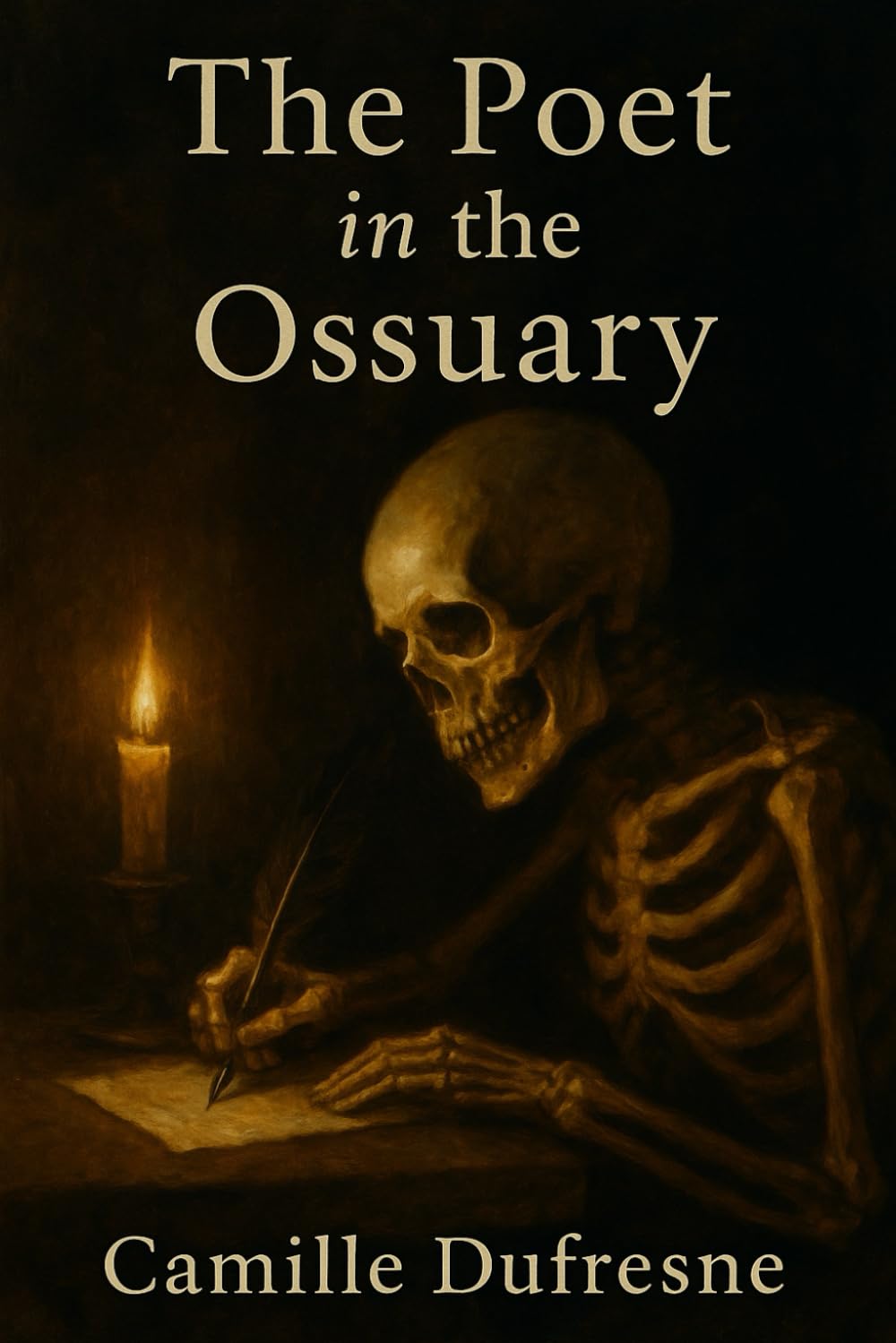
The Poet in the Ossuary
A Historical Gothic Metaphysical Mystery by Camilla Dufresne
In 18th-century Prague—a city of spires, bones, and bureaucracy—a poet who cannot die awakens beneath the streets. His flesh long gone, his mind remains—a skeleton who writes by candlelight in the ossuary below St. Giles. Each night, his quill scrapes prophecies onto parchment, verses that begin to echo the murders and miracles above. When his words start to come true, both the living and the dead begin to hunt the author.
Aboveground, a clerk named Magdalena—practical, devout, and quietly defiant—discovers the impossible link between the city’s reforms and the poet’s secret hand. As superstition and reason wage war through Prague’s cobblestone veins, Magdalena becomes the living half of the poet’s sentence: transcribing his poems into laws, rituals, and small acts of mercy that transform the city itself. Bells become witnesses. Windows are taught to open the width of a finger. Bureaucrats learn to hum hymns. And through it all, the ossuary below keeps writing.
But the poet’s immortality is running out. His verses are fading; his ink is turning to dust. To save the language that keeps him tethered to the world, he must entrust it to the living—before the empire above seals his final breath in stone.
Lush, haunting, and darkly luminous, The Poet in the Ossuary is a Gothic meditation on art, faith, and civic grace. Blending history with the uncanny, it reimagines 18th-century Prague as a living organism—one that learns to breathe through its people. Each chapter builds a city of metaphors: reliquaries turned into cupboards, rain treated as bureaucracy, and death rewritten as public record.
Readers of Susanna Clarke’s Piranesi, Erin Morgenstern’s The Night Circus, or Patrick Rothfuss’s The Slow Regard of Silent Things will find themselves at home in its labyrinth of candles, ink, and philosophy.
At once a mystery, a parable, and a love letter to forgotten clerks and stubborn poets, this is the story of how a city saved its soul—not through miracles, but through manners.
When the last candle burns out, the ossuary sleeps.
The city breathes.
And somewhere beneath the stones, a quill still waits—at right angles.
Key Themes:
• Historical Gothic • Death and immortality • Civic faith and bureaucracy
• Metaphysical mystery • Lyrical literary fiction • Prague folklore
Keywords: gothic mystery, historical literary fiction, metaphysical fantasy, philosophical gothic, poet skeleton, Prague historical novel, lyrical prose, immortality, dark romantic literature, atmospheric gothic